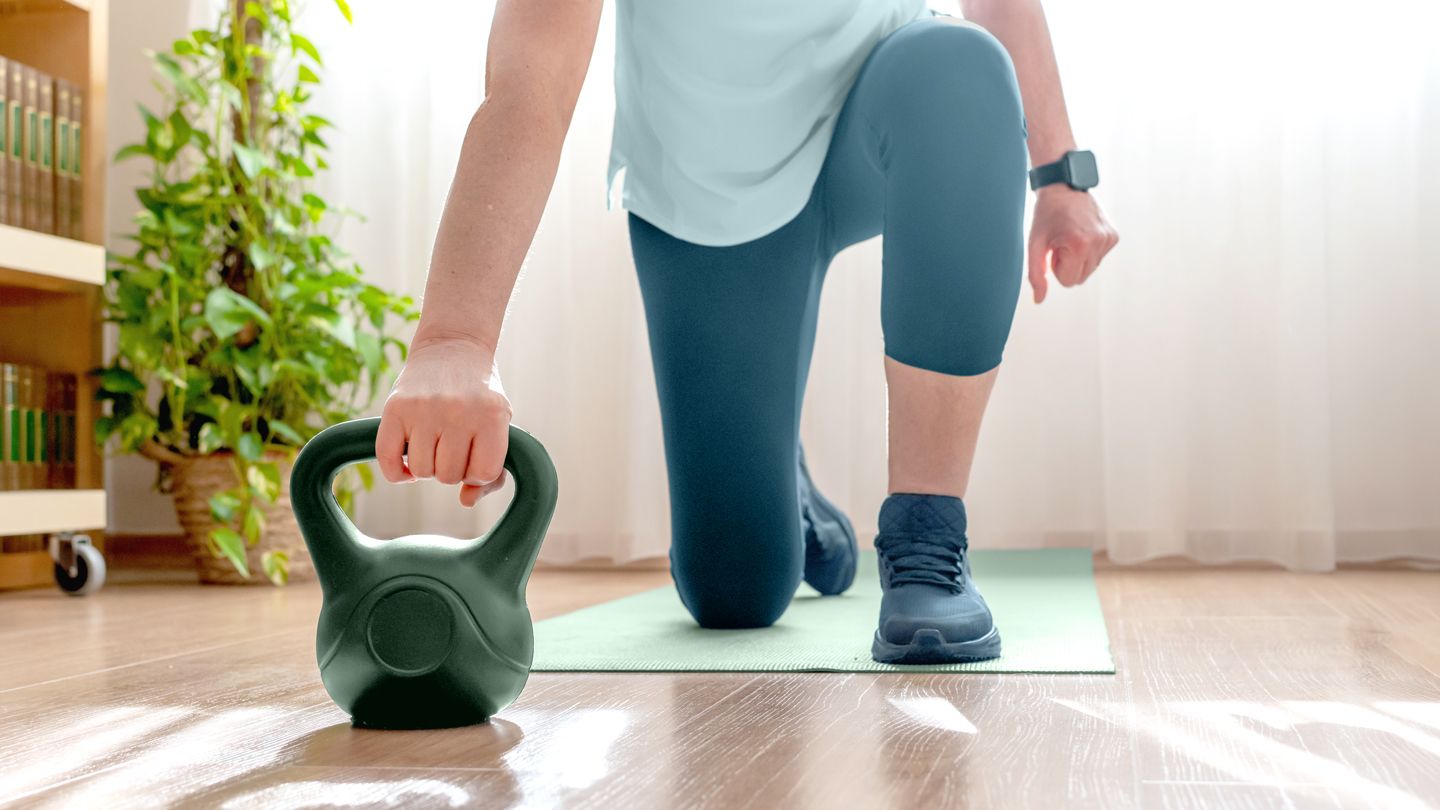
Experts have long known that aerobic exercise is good for your heart. Now, a new study focused on women suggests adding a little strength training can do wonders for long-term cardiovascular health as well.
“This new study supports that strength training deserves to be treated as a core heart-healthy lifestyle component — not an afterthought,” says Amanda Paluch, PhD, an associate professor of kinesiology at the University of Massachusetts Amherst School of Public Health, who was not involved in the study.
Resistance Training Tied to Lower Heart Disease and Heart Attack Risks
Researchers analyzed data from about 117,000 U.S. women participating in the long-running Nurses’ Health Study and Nurses’ Health Study 2. Participants checked in every four years to report on how much daily exercise and movement they were getting. Over the course of about 15 years, investigators tracked major cardiovascular situations, including heart attack, stroke, coronary artery bypass surgery, and other coronary interventions.
The researchers found that, compared with women who reported no resistance training, those who performed at least two hours per week had:
- A 20 percent lower risk of major heart disease
- A 44 percent lower risk of heart attack (also known as myocardial infarction)
Researchers also found that each additional hour of weekly resistance training was associated with a 5 percent lower risk of major cardiovascular disease and a 14 percent lower risk of heart attack.
“Our findings suggest that resistance training and sitting less provide additional benefits on top of aerobic activity, supporting a more comprehensive approach to women’s heart health that emphasizes multiple types of exercise and reduced sedentary time rather than focusing on aerobic exercise alone,” says study author Edward Giovannucci, MD, a professor of nutrition and epidemiology at the Harvard T.H. Chan School of Public Health’s Department of Nutrition in Boston.
Why Strength Training May Benefit Heart Health
“Resistance training directly improves the risk factors that lead to heart disease — lowering blood pressure, improving blood sugar control, shifting body composition toward more muscle and less fat, and improving cholesterol,” Dr. Paluch explains.
It also boosts cardiorespiratory fitness, or how well your body uses oxygen to supply blood to working muscles.
“More muscle means a greater capacity to use oxygen efficiently, and greater cardiorespiratory fitness is associated with better heart health and lower risk of heart disease,” Paluch adds.
The study authors also noted that some of the observed benefits were partially explained by improvements in body weight, diabetes, high blood pressure, and cholesterol levels. They underscored that sitting less made a significant difference, too.
“Excessive sedentary behavior can increase cardiovascular risk even in people who exercise, because long periods of sitting slow down blood flow, reduce muscle activity, and can worsen blood sugar, blood pressure, and blood fat levels,” Dr. Giovannucci says.
“In other words, a daily workout does not fully offset the harm of sitting for many hours, so both regular exercise and breaking up sitting time are important for heart health.”
Women With the Lowest Risk Combined Strength Training With Cardio
“The combination wins out,” Paluch says. “Strength training and aerobic training benefit the body in unique and equally important ways, so they’re complementary, not either/or, and together they outperform either alone.”
Women in the study who met aerobic activity guidelines in addition to doing resistance training had a 45 percent lower risk of heart attack compared with inactive women. This suggests that strength training is a helpful addition to activities like brisk walking, cycling, swimming, or jogging — not a substitute.
“The combined effect on lowering heart attack risk was larger than I would have expected from aerobic exercise alone, suggesting that strength training may be more important for women’s heart health than we previously thought,” says lead study author Tianyue Zhang, MD, a scientist at the Harvard T.H. Chan School of Public Health.
Still, the study was observational, meaning it cannot prove that resistance training directly caused the lower heart risk. Exercise habits were also self-reported, which can introduce error, and participants were mostly healthcare professionals, which limits generalizability to the broader population.
Plus, participants reported their habits between 2003 and 2017. That data may not fully reflect typical sedentary behaviors today.
“Since this data was collected, our screen habits have expanded well beyond TV, so the study can’t fully capture the broader sedentary screen-time challenge we’re facing today,” Paluch says.
How to Get Started With a Heart-Healthy Exercise Habit
To support long-term heart health, experts say the goal isn’t choosing between cardio and strength training; it’s finding ways to incorporate both.
“The main takeaway is that women may get the best heart protection when they combine different types of movement, rather than focusing on just one. Our findings support counseling women to meet aerobic exercise guidelines, add resistance training, and reduce sedentary time throughout the day,” Dr. Zhang says.
But you don’t need a gym membership for resistance training.
“In real life, resistance training means any activity where your muscles work against a load,” Giovannucci says. “It definitely does not have to be in a gym or with heavy weights. The key idea is that the activity makes your muscles work harder than usual, and over time, helps build or maintain strength.”
Experts generally recommend:
- At Least 150 Minutes of Moderate-Intensity Aerobic Activity Weekly To work your way up to aerobic activities like biking, water aerobics, and tennis, try incorporating bouts of movement throughout the day — such as walking flights of stairs for two minutes every hour. “These small, frequent movements help improve blood pressure, blood sugar, and circulation, even if you don’t have time for long workouts,” Zhang says.
- Strength-Training Activities Involving Major Muscle Groups at Least Twice Weekly You don’t need a barbell for strength training your major muscle groups. “That can be as simple as incorporating exercises such as bodyweight squats and push-ups at home or a resistance band kept by the couch,” Paluch says.
- Breaking Up Prolonged Periods of Sitting Whenever Possible Aim to spend less time watching TV and using a computer or other electronic devices. “Try swapping one show this week for a walk with a podcast or audiobook instead as a way to get in some aerobic activity,” Paluch suggests.
Read the full article here