What to Look for When Choosing Shoes
Shoes, sneakers, and other footwear should feel comfortable and not pinch or irritate any part of your foot, even when new. When you try on shoes, spend some time walking around in them and paying attention to how they feel. No matter how good they look, don’t buy shoes that are too tight, too loose, unsupportive, or in any way uncomfortable.
To raise your chances of finding a comfortable fit, here are some shoe characteristics to look for.
Moderate Heel Height
According to Pauline Fu, DPM, an assistant clinical professor of orthopedics at Mount Sinai hospital in New York City, shoes with a slight heel are best. The fact that your heels are slightly elevated allows your ankle to turn a little bit and rotate differently.
On the other hand, a heel that’s the same height as or lower than the toe of the shoe, affects the way your leg — and, in turn, your pelvis — turns. That, then, will affect your spine and lower back and cause back pain, Dr. Fu says.
What qualifies as a “slight” heel? Bryon Butts, DPM, of Performance Footcare of New York, points out that the guidelines from the American Podiatric Medical Association recommend something under 2 inches, and never anything higher than that.
Fu notes that 2-inch heels have been shown to alleviate the pressure on your feet while walking. The ideal range, she says, is between 1 and 2 inches. Anything over that will not be kind to your back.
While heel height is more typically a concern when it comes to women’s shoes, the concept of heel height as a positive feature applies to men as well, Fu says. That said, she also points out that most men’s shoes are neutral in heel height, so the heel and toe are on the same level — and that men have a lower incidence of back pain than women.
Cushioning and Shock Absorption
In addition to heel height, how well the shoe’s heel absorbs shock is important to how your back feels. Wearing shoes that don’t have enough cushioning (or have padding that is worn out) can lead to back pain. Even for standing on a hard surface for a long time — like if your job is stationed on a concrete floor — having adequate cushioning can prevent fatigue and discomfort.
Some people strike the ground with their heel harder than others while walking, sending a shock up their legs and toward their backs. The problem can be exacerbated in those wearing dress shoes, but Fu and Dr. Butts note that a cork heel can help. The same goes for a rubber heel or wedge-style shoes, says Fu.
And both doctors agree that the sweet spot lies in the middle: a shoe that isn’t too hard or too soft.
When it comes to running shoes, “maximalist” footwear with a lot of cushioning has become big among ultramarathoners and people with a high-arch foot type, according to Butts, who specializes in sports medicine and treating foot and lower limb conditions in runners.
Rocker-Bottom Soles
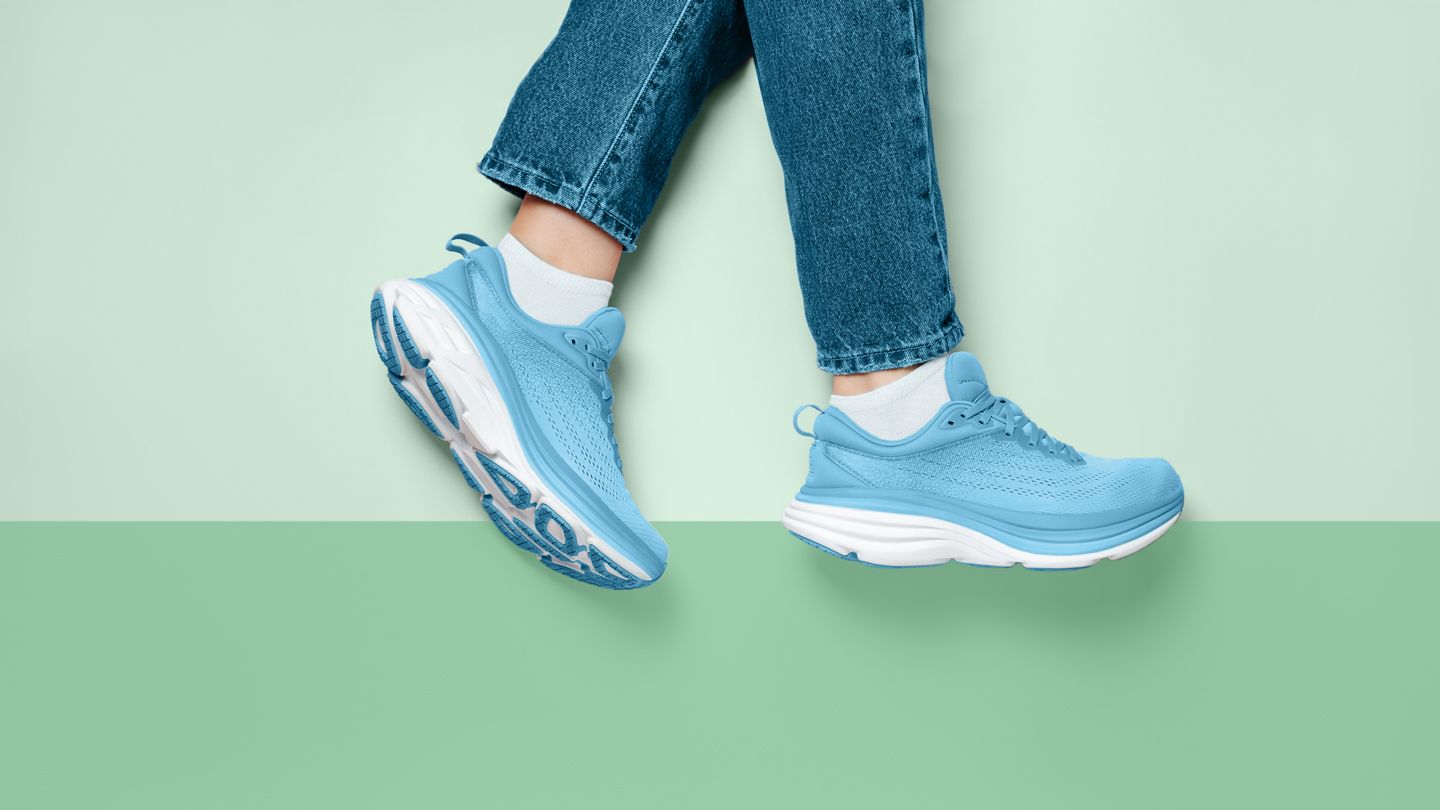
Rocker-bottom soles aren’t for everyone, but they can be helpful in some situations. These feature thick soles that curve up at the front and sometimes the back of the shoe, enabling the foot to move through a normal walking motion with less pressure on the joints and on the bottom of the foot, generally.
Rocker-bottom soles are sometimes a feature of therapeutic shoes prescribed to people with diabetes-related foot problems, and they’ve also become more common in some models of sneakers and walking shoes marketed to the general public.
Fu notes that rocker-bottom sneakers with a thick rubber sole alleviate impact on the heel. Some of her patients find them to be helpful in dealing with plantar fasciitis, as well as with knee, hip, and back pain.
Runners may find rocker-style shoes to be more comfortable than conventional running shoes, according to a scoping review of the research out of Germany. There is limited research, however, exploring the ability of rocker shoes to prevent injuries in runners.
Sandals With Arch Support
Generally speaking, sandals and flip-flops don’t provide a lot of arch support. Inadequate arch support doesn’t keep your feet and ankles in proper alignment, which puts extra pressure on your knees, hips, and back.
But special, orthopedic-style sandals are an exception, says Fu. These do provide a proper amount of arch support, Butts agrees.
If you love sandals as daily footwear, a podiatrist should be able to help you identify which types would be best for you.
Read the full article here