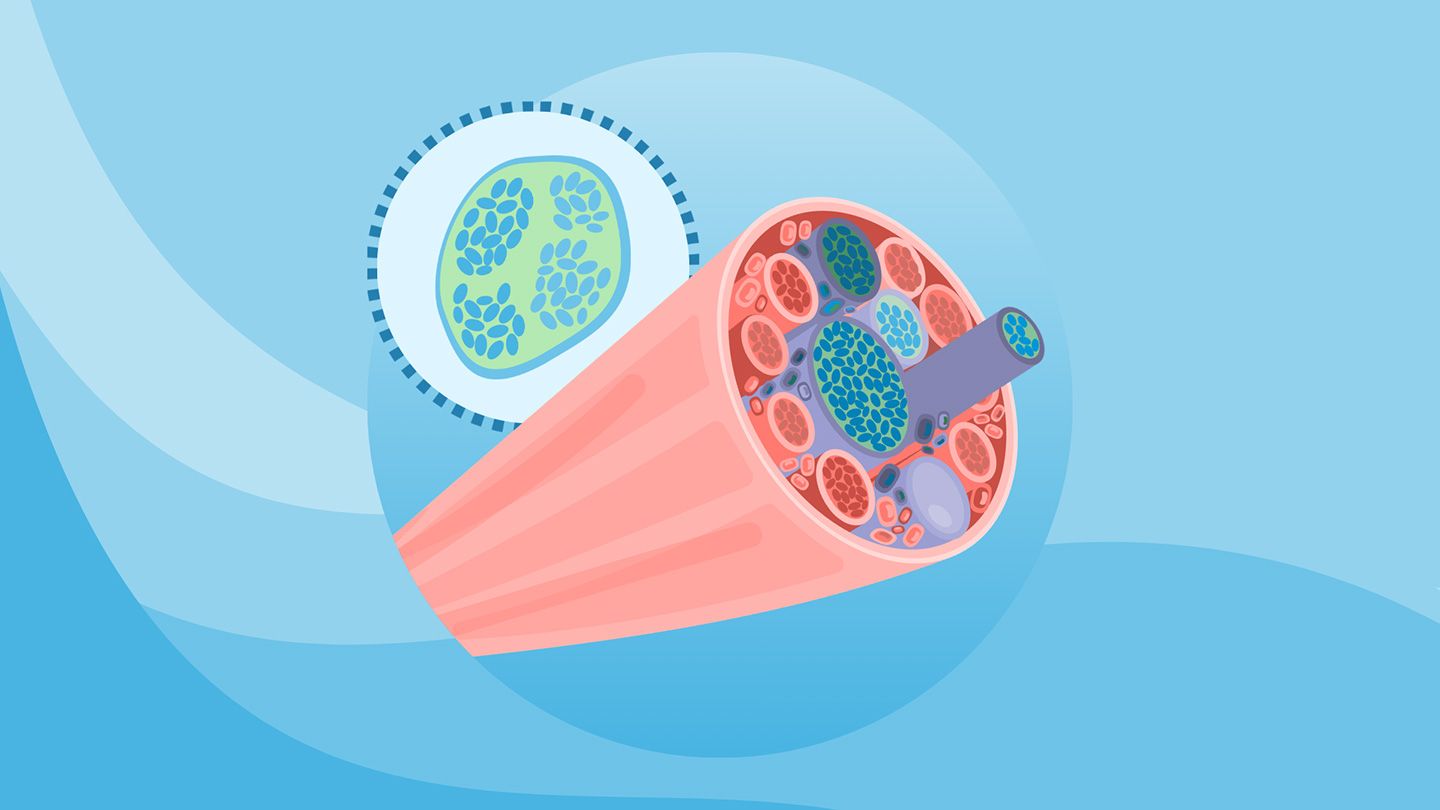
Types of Pompe Disease
Pompe disease, which is sometimes called acid maltase deficiency or glycogen storage disease type 2, is broadly classified into two types:
- Infantile-onset (IOPD), which appears within the first year of life
- Late-onset (LOPD), which can be diagnosed at any other age, from early childhood to late adulthood
Both forms of the disease are characterized by a genetic deficiency of an enzyme called acid alpha-glucosidase (GAA). GAA is necessary to help break down glycogen, a complex sugar molecule stored in the muscle and organs, into simple glucose.
Infantile-Onset Pompe Disease
IOPD is the most severe and rapidly progressing form of the disorder. IOPD usually involves a near-total deficiency of the GAA enzyme, and its effects show up within the first days, weeks, or months of life.
If left untreated, IOPD leads to muscle weakness, difficulty breathing, and enlarged heart. Today, most infants in the United States are screened for Pompe disease soon after birth, which can allow for treatment before the complications become debilitating or life-threatening. But in the past, IOPD was fatal.
IOPD can additionally be categorized as either CRIM-negative or CRIM-positive. Some infants with IOPD make tiny amounts of nonfunctional GAA; this substance is referred to as cross-reactive immunological material (CRIM) because it teaches the immune system to recognize GAA as a natural part of the body:
- CRIM-positive infants should benefit from enzyme replacement therapy without complications.
- CRIM-negative infants lack any GAA at all, and their immune systems attack enzyme replacement medications as foreign substances. These children will need additional immune modulation medication to allow enzyme replacement therapy to work, and they may experience more significant developmental difficulties.
Advances in treatment mean that IOPD is an increasingly manageable condition, provided that immediate treatment with enzyme replacement therapy is available. While long-term survivors may still face challenges with muscle fatigue, breathing, or speech, many are now reaching adulthood, attending school, and achieving physical milestones once thought impossible.
Late-Onset Pompe Disease
LOPD is a slower-moving form of Pompe disease that may be diagnosed at any age after the first year of life. In LOPD, a partial absence of GAA causes a slow accumulation of glycogen that primarily weakens the skeletal muscles, but usually does not lead to an enlarged heart. In younger children, LOPD may first manifest as clumsiness or lack of athleticism. In adults, it is best understood as a progressive muscle-wasting disorder.
Although LOPD does not progress rapidly, it can do substantial damage to the muscular system in the months or years before it is diagnosed. Enzyme replacement therapy can significantly slow the accumulation of glycogen, leading to near-normal life expectancy, though people with the condition may slowly develop breathing difficulties and may increasingly require mobility aids such as wheelchairs.
Read the full article here