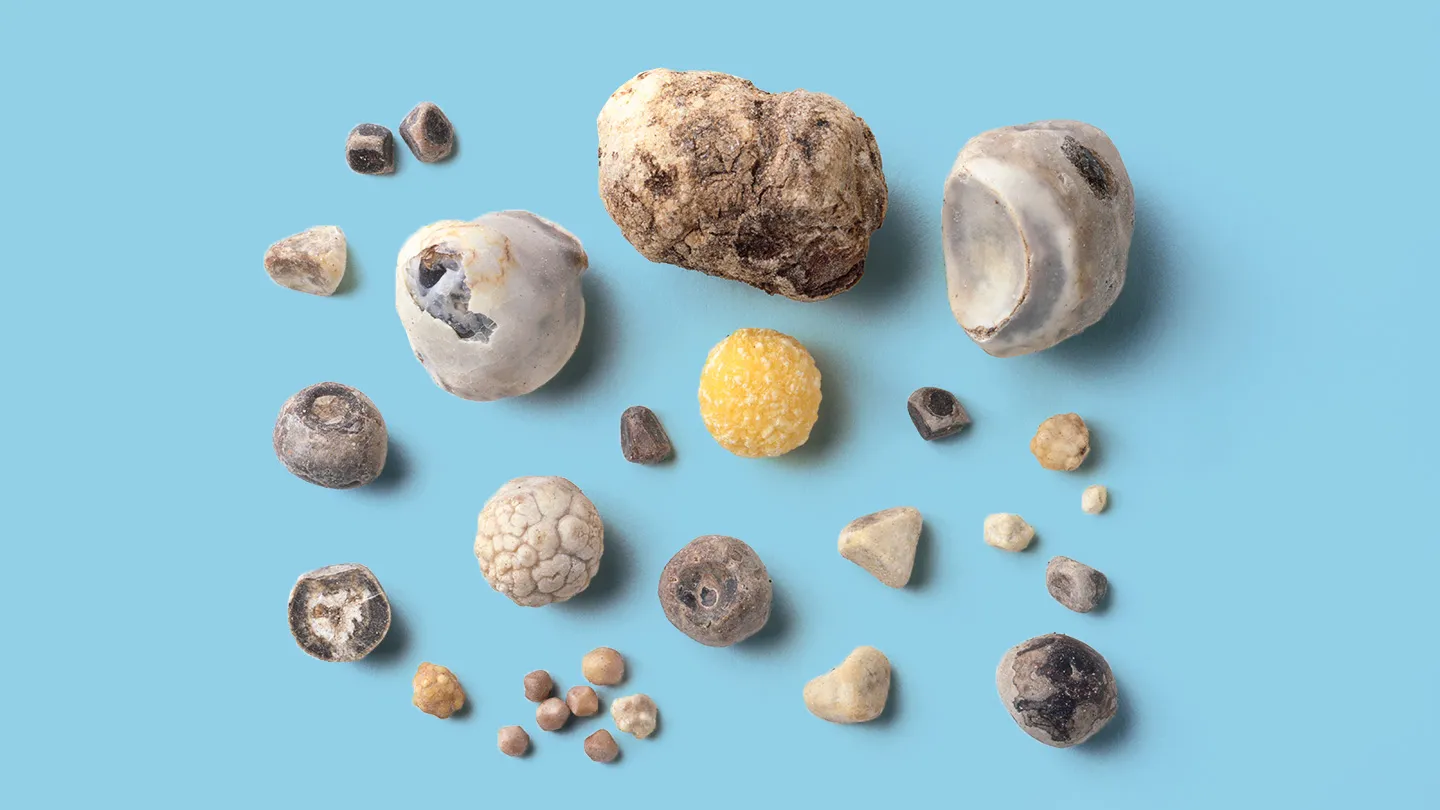
The mere presence of gallstones doesn’t mean surgery to remove the gallbladder is necessary, says Martin Luchtefeld, MD, a colorectal surgeon with Corewell Health in Grand Rapids, Michigan. “Reasons for removing the gallbladder include repeated episodes of cholecystitis [inflammation of the gallbladder] or complications from gallstones, such as pancreatitis or bile duct stones,” he says.
Although you can expect gallbladder surgery to ease the pain of gallstones, Dr. Luchtefeld says, it may bring on an unpleasant and familiar symptom: diarrhea.
“The gallbladder normally stores bile produced by the liver until the time of a meal,” he says. Eating food, especially fatty food, stimulates the gallbladder to release bile into the gastrointestinal (GI) tract via the duodenum (the very first part of the small bowel, just below the stomach). “Once the gallbladder and its storage mechanism are removed, the bile is released continuously into the GI tract,” he says. “So if bile is in the GI tract without food, it can be very irritating to the bowel and cause diarrhea.”
Chronic diarrhea can be treated, however: You might be advised to take over-the-counter antidiarrheal medications, or a drug that removes bile acids from the body, such as cholestyramine (Prevalite).
If you need gallbladder surgery, Luchtefeld recommends finding a surgeon who works with people with Crohn’s on a regular basis.
Read the full article here