1. Salmon
- Protein per 4 oz serving: 23.3g
Salmon packs 23.3 g of protein into one serving, but the fatty fish offers other nutrients to support health in perimenopause. “Fish like salmon is the leading source of omega-3 fatty acids, which fight inflammation and protect bone and heart health,” Moskovitz says.
2. Skinless Chicken
- Protein per 4 oz serving: 25.6g
Skinless chicken is a good source of lean protein, delivering 25.6 g per serving. “It has little saturated fat, so most of the calories are amino acids or protein building blocks,” Dr. Angelone says. Chicken’s high protein content can also help you feel more full after eating, which can support a healthy weight during perimenopause, Angelone says.
Beyond protein, chicken provides B vitamins and iron, both of which can support energy levels, Moskovitz says. Low hormone levels in perimenopause can contribute to fatigue, a common symptom of this life stage, Shepherd says. Chicken is also relatively simple to cook and can be used as a main dish or in wraps.
3. Plain Greek Yogurt
- Protein per ¾-cup serving: 15g
4. Eggs
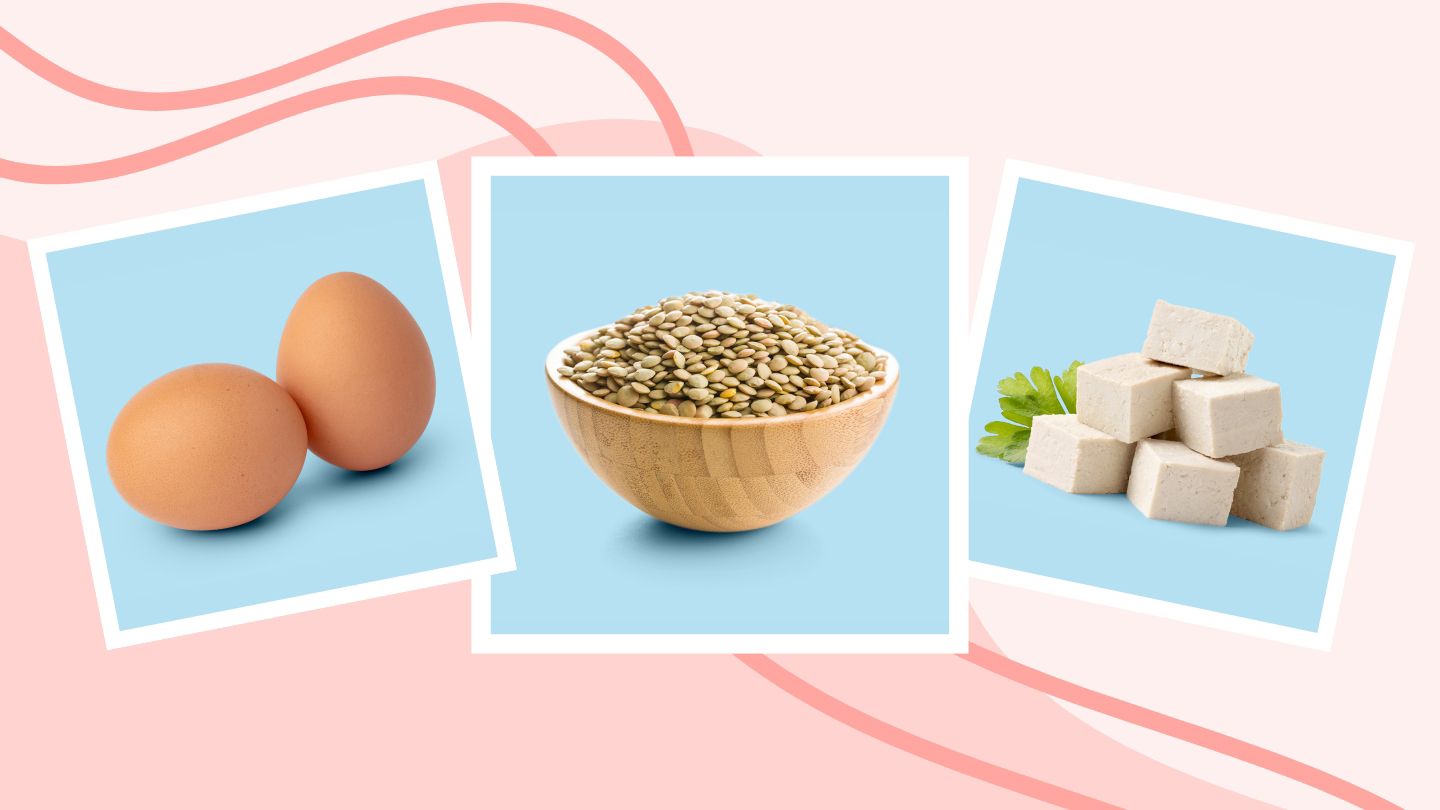
Eggs aren’t the largest protein source you’ll encounter at 6.24 g per egg, but their added nutrition benefits make them a dietitian favorite. “Eggs are so easy to make,” Moskovitz says. “The yolk also acts like nature’s multivitamin, offering nutrients from vitamin A to zinc.”
Angelone points out that eggs are an inexpensive protein source and simple to whip up in a variety of ways. “They also contain choline, which is good for the brain and the liver, but a nutrient most people don’t eat enough of,” she adds. Like Greek yogurt, eggs are a complete source of protein, making them good for vegetarians.
5. Tofu
- Protein per 3.5 oz serving: 9.98g
Tofu is a complete protein that provides nearly 10 g per serving. “Tofu contains plant estrogens that bind to estrogen receptors,” Angelone says. “Since they are weak estrogens, they may help ease hot flashes.”
Moskovitz says the plant estrogens in tofu may also help reduce fatigue linked with perimenopause, plus it packs calcium to support bone health. Tofu is another versatile food that can be grilled, scrambled, or blended into other foods like smoothies.
6. Lentils
- Protein per 100 g serving: 23.6g
Lentils offer 23.6 g of protein per serving, along with fiber and iron. “I love lentils for my clients,” Moskovitz says. “You get so much bang for your buck.” Lentils are often combined with other foods, allowing you to get in other nutrients, including additional protein sources, she points out.
The fiber in lentils can help support healthy digestion, which can be a challenge in perimenopause, Angelone says. This food may also help to lower cholesterol and support blood sugar management, she adds.
7. Cottage Cheese
- Protein per 1-cup serving: 24.4g
Cottage cheese is experiencing a popularity renaissance, and Moskovitz says the fanfare is valid, especially for women in perimenopause. “It’s quick, versatile, and full of protein,” she says. Angelone adds that cottage cheese is “slow-digesting,” noting that it can help you to feel fuller, longer.
Cottage cheese also contains calcium for bone health, along with iodine for thyroid support, Moskovitz points out. Some varieties even have probiotics added to support gut health, Angelone says.
Read the full article here