That said, some people find more success by targeting one issue before tackling the other. The order and pace of treatment is highly individual — what works best depends on the severity of each condition and your own preferences. So, it’s best to discuss your treatment goals with your doctor.
Here are the standard approaches to addressing each condition.
CPAP for Your Sleep Apnea
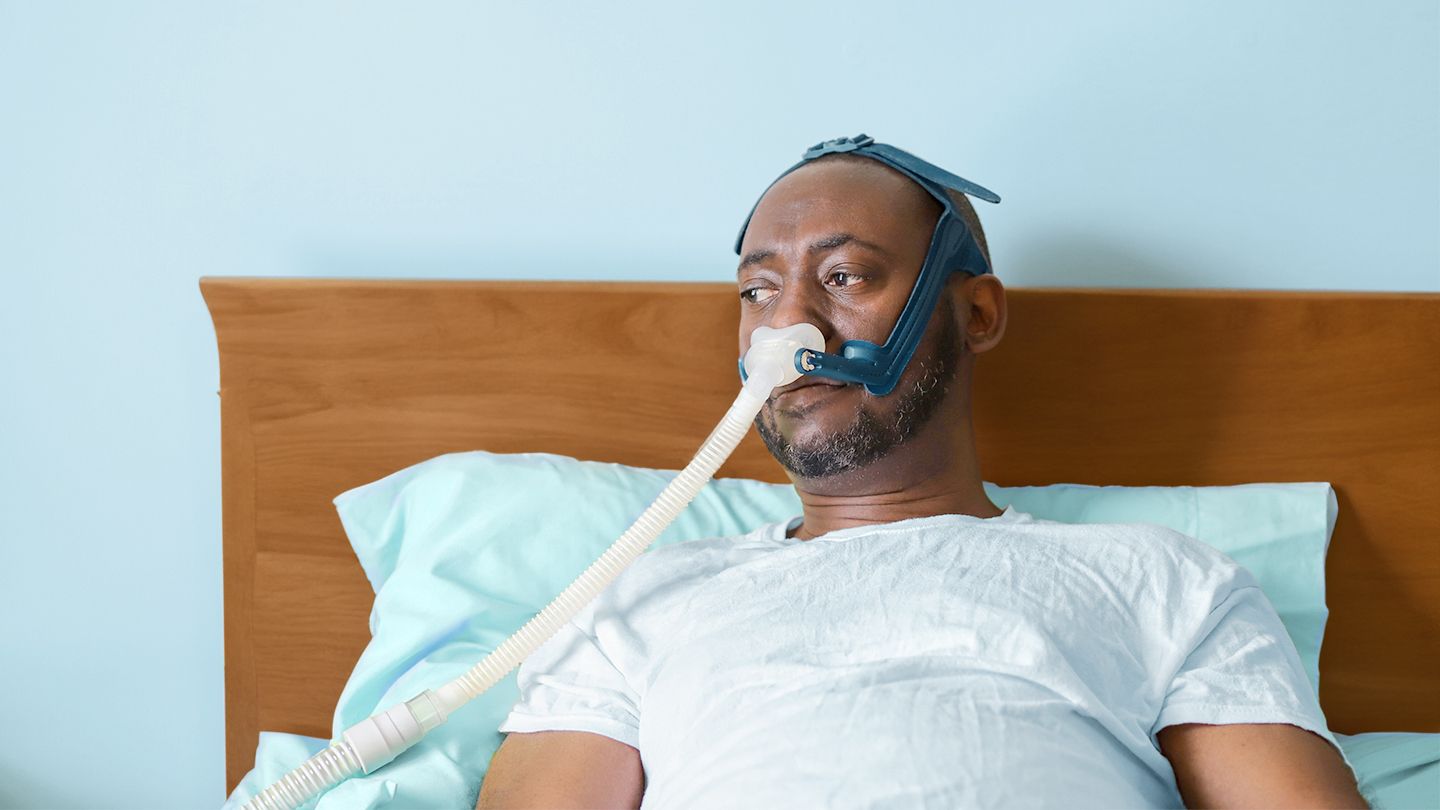
The gold standard treatment for OSA is a CPAP machine. It delivers continuous air through a mask worn over either your nose and mouth or just your nose to keep your airways open while you sleep.
CPAP therapy significantly improves OSA, producing significant, lasting reductions in the apnea-hypopnea index (AHI), the number of breathing interruptions that occur per hour. In one study, people who used CPAP started with an average AHI of 49.2 events per hour — which qualifies as severe OSA — and ended within the normal range at 3.4.
Ideally, you’ll start CPAP at the same time as you treat your insomnia. But if your sleep apnea is the more urgent concern, for instance you wake up gasping, your doctor may be more aggressive about treating the apnea first, Hart says.
Still, you may see dramatic improvements in sleep by simply addressing OSA. “I’ve had patients for whom CPAP was a huge game changer in their insomnia,” Hart says. “They started it and within months had made strides.”
Regardless of treatment timing, it’s important to give yourself time to adjust to CPAP therapy. For patients who struggle with discomfort with a CPAP mask, Katherine Belon, PhD, a licensed clinical psychologist with certifications in behavioral sleep medicine and cognitive behavioral therapy for insomnia with a private practice in Albuquerque, New Mexico, recommends wearing it for 20 to 30 minutes a day while watching TV or relaxing. Once you feel more comfortable, you can start incorporating your CPAP into your nightly routine.
CBTi for Your Insomnia
The recommended first-line treatment for insomnia is cognitive behavioral therapy for insomnia (CBTi), a structured therapy that involves changing your behaviors and habits around sleep. “That in and of itself is often a surprise, because people think insomnia is a medical condition and would be treated with medications,” Dr. Belon says. “But CBTi in the long run tends to do much better than sleep medications for insomnia.”
Indeed, many common medications used to treat insomnia often suppress breathing, which can make OSA worse, Hart notes. CBTi, on the other hand, matches the effectiveness of sleep medications but has the advantage of no side effects.
CBTi also improves COMISA. In one study, people who completed a six-week CBTi program saw their AHI decrease by an average of 5.5 events per hour — a 15 percent improvement.
CBTi is led by a behavioral health provider, such as a psychologist or licensed therapist trained in sleep medicine. In addition to keeping tabs on your CPAP use, your CBTi provider will lead you through common strategies to improve insomnia, including:
- Stimulus Control This trains your brain to associate your bed with sleep rather than wakefulness or anxiety. If you’re lying awake for more than 15 to 20 minutes, your therapist will encourage you to get up. “I also like to send a message that anytime you’re experiencing really strong negative emotions in bed — feeling frustrated, anxious, or panicky — that is also a cue to get out of bed,” Belon says.
- Sleep Restriction This limits the amount of time you spend in bed to try to make you sleepier. “Your sleep drive is similar to hunger — it builds up the longer you go without sleep,” Belon explains. “If you take a nap, it’s like having a snack right before dinner. It’s going to weaken that appetite or sleep drive.” Your therapist will set a specific bedtime and wake time, often pushing your bedtime later than usual to strengthen that drive before gradually adjusting the window as your sleep improves.
- Sleep Education Your therapist will address common myths and misconceptions about sleep, such as the popular advice to do something boring when you can’t sleep. That approach usually backfires, as it leaves your mind free to worry about sleep, Belon says. “You’re better off doing something that takes your mind off the fact that you can’t sleep, and waiting until you feel nice and sleepy as your cue to get back into bed.”
- Cognitive Therapy This component targets the anxious thoughts and beliefs about sleep that develop over time and keep insomnia going. “Decreasing anxiety around insomnia is the biggest goal,” Belon says.
It typically takes four to eight sessions for CBTi to address insomnia. But people with COMISA may need more time, Belon says.
Read the full article here