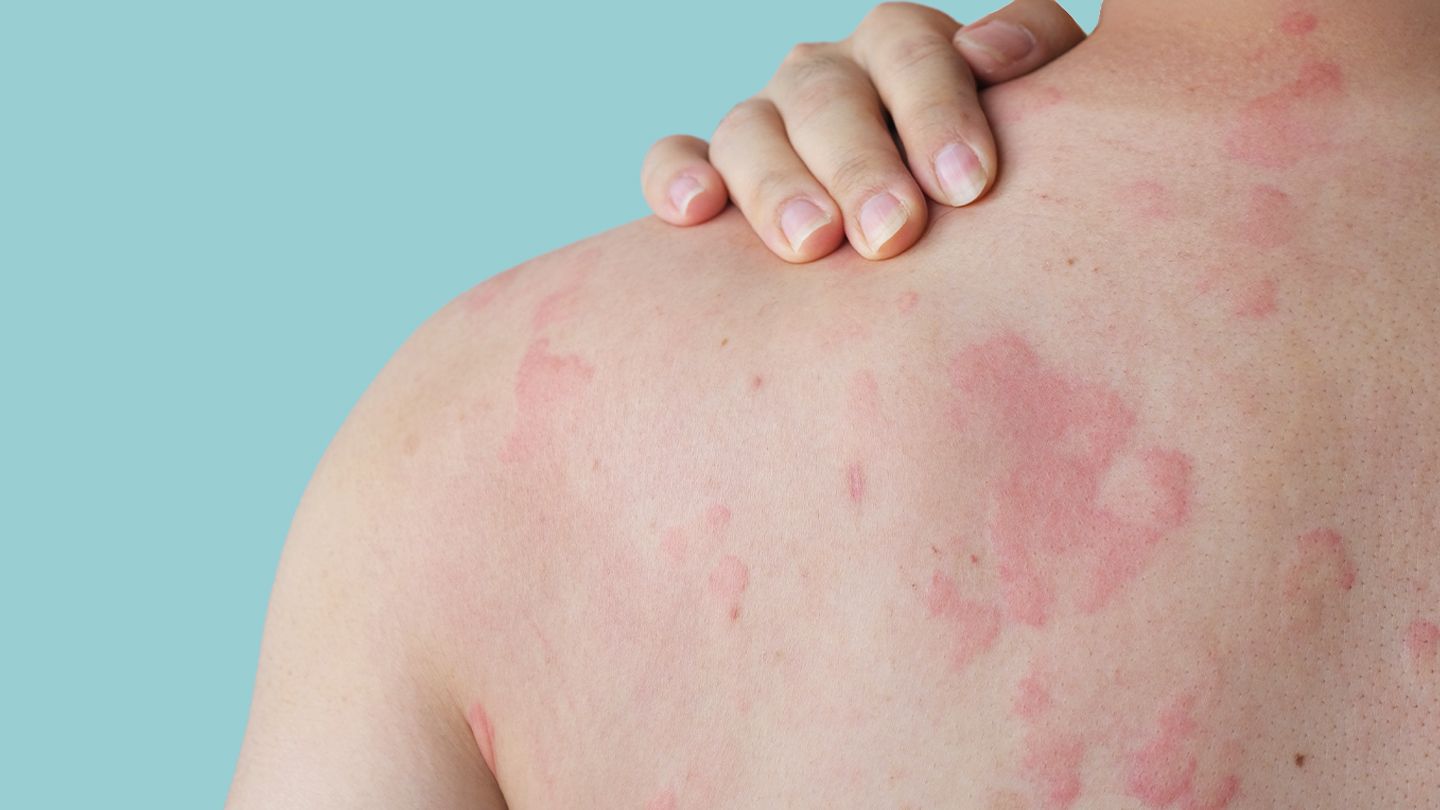
If the hives trigger is known, your doctor’s visit will likely be relatively straightforward. Say you suspect the hives are in response to a food allergy: An allergist should be able to conduct tests to confirm the trigger and can suggest medications to either prevent hives from occurring or reduce the intensity and severity of your symptoms.
A large percentage of time, however, the reason for hives is not clear, so you and your doctor will need to work together to figure out the cause.
When you visit your doctor, they will likely start with a physical exam and will take a look at the welts on your skin. There’s little doubt about how to manage acute hives. Providers prescribe antihistamines, and hives usually go away, Choudhury says.
If you visit an allergist, they may call for skin tests, blood tests, or urine tests to try to figure out what’s going on. In rare instances, they may suggest an oral food challenge, during which a doctor monitors you after eating a small amount of a suspected food trigger to see if hives develop.
A dermatologist will likely diagnose hives simply by looking at your skin, though it’s possible that they may do a skin biopsy, too, during which the affected skin is examined under a microscope.
Read the full article here