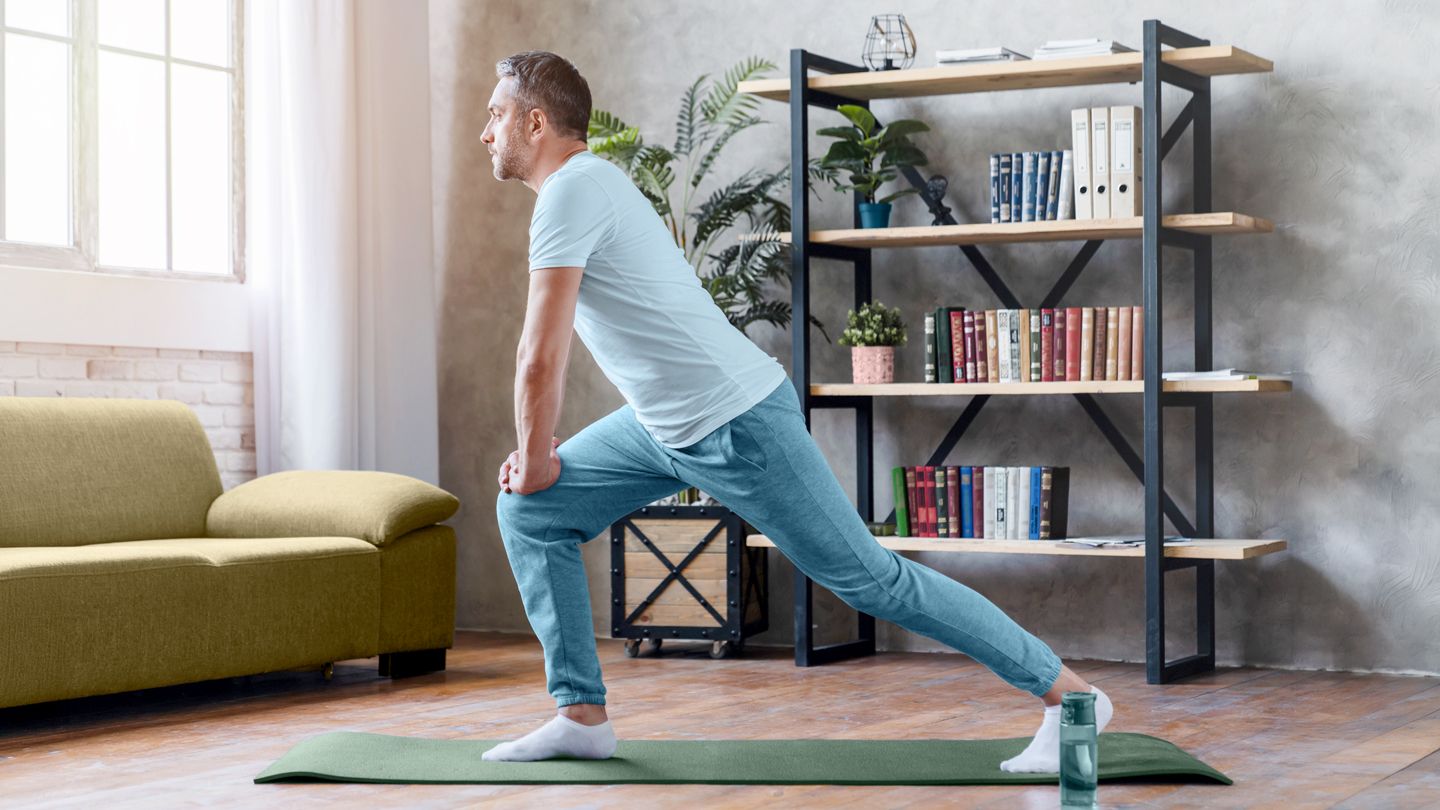
Globensky notes that as long as your kidney care team hasn’t given you any special limits, combining these different types of exercise can help you stay strong and maintain your general physical well-being.
Aerobic Exercises
- Walking Move at a slow, steady pace. Start with 5 to 10 minutes once or twice a day, then gradually work toward 20 to 30 minutes most days.
- Stationary Cycling Pedal at a light to moderate effort. Begin with 5 to 10 minutes and build up to 20 to 30 minutes as you get stronger.
- Swimming Swim or walk laps in a pool at a gentle pace. The buoyancy of water helps take pressure off your joints, making it a great option if you have any discomfort with land-based activity. Most people can start with 10 to 15 minutes.
- Elliptical Training An elliptical is a stationary exercise machine that simulates walking or running with less impact on your joints. Start at an easy pace for 5 to 10 minutes and gradually increase your time.
- Dancing Try easy dance steps at home or in a group class. About 10 to 20 minutes each time is a good starting point.
- Gardening or Active Yard Work Digging, raking, and mowing can count as exercise if done at a steady pace. Take breaks as needed and stay hydrated, especially in hot weather. If your healthcare team has prescribed a fluid restriction, follow their guidance on how much you should drink.
“A good rule is to keep aerobic work at an easy to moderate level at first,” says Globensky. This means you’re breathing heavily while exercising, but you can speak in full sentences. If you’re too out of breath to do that, you’re probably pushing too hard, he says.
Mixing activities can help you stay consistent, says Marwa Ahmed, a National Academy of Sports Medicine certified personal trainer who works with people with kidney disease and the founder of the BodyMind Coach, a coaching practice in Toronto. You might swim twice a week, for example, then walk or cycle on two other days, but choose activities you enjoy and can see yourself doing regularly, she says.
Strength Training
Ahmed recommends starting with two sessions per week of about 20 minutes each, with a rest day in between. As you feel stronger, gradually increase your sessions to 45 to 60 minutes, or add a third day to target more specific muscle groups, but always start with light resistance and increase the challenge slowly, she says.
Below are beginner‑friendly full-body training exercises Ahmed recommends, aiming for two to three sets of each movement per session.
- Sit-to-Stand Sit near the edge of a sturdy chair with your feet flat on the floor, lean slightly forward, then push through your heels to stand. Lower yourself back down slowly with control. Repeat this movement 8 to 12 times, known as repetitions (or reps).
- Wall Push-Ups Stand about an arm’s length from a wall, place your hands flat at shoulder height, bend your elbows to lower your chest toward the wall, then push back to the start. This is a joint-friendly way to build chest, shoulder, and arm strength. Aim for 10 to 12 reps.
- Seated Leg Raises Sit upright in a sturdy chair and extend one leg straight out in front of you, squeezing your thigh at the top, then lower with control. Repeat with the other leg. This strengthens the muscles that support your knees and hips. Try for 10 to 12 reps per leg.
- Overhead Press Stand or sit upright with a light dumbbell in each hand at shoulder height with palms facing forward, then push the weights straight up until your arms are extended (avoid locking your elbows), and lower back down with control. This builds shoulder and upper back strength. Work toward 8 to 12 reps.
- Glute Bridges Lie on your back with your knees bent and feet flat on the floor. Press through your heels to lift your hips until your body forms a straight line from shoulders to knees, squeeze your glutes at the top, then lower with control. This strengthens the glutes and hamstrings and helps support the lower back. Aim for 10 to 15 reps.
Flexibility and Mobility
“These movements help improve your range of motion, reduce joint stiffness, and help you with recovery,” says Ahmed. Think of them as maintenance work for your body that can make other types of exercise feel more comfortable and help you stay safely active.
Globensky and Ahmed recommend the flexibility and mobility exercises below.
- Calf Stretch Stand facing a wall about an arm’s length away and place your palms flat against it at shoulder height for support. Step one leg straight back, pressing that heel firmly into the floor and leaning your hips slightly forward until you feel a gentle stretch in your lower leg. Hold for 15 to 30 seconds and repeat 2 to 4 times on each side.
- Chest Stretch Stand in a doorway and place your forearms against the doorframe with your elbows bent. Step forward slightly until you feel a gentle stretch across your chest and the front of your shoulders. Hold for 15 to 30 seconds and repeat 2 to 4 times.
- Shoulder Rolls Relax your arms at your sides, then slowly roll your shoulders up toward your ears, back, and down in a circular motion. Repeat 10 to 15 times, then reverse direction.
- Cat-Cow Start on your hands and knees with your wrists under your shoulders and your knees under your hips. Slowly arch your back and lift your head, then round your spine and tuck your chin toward your chest. Repeat 5 to 10 times, moving slowly with your breath.
Balance Exercises
Here’s what balance exercises might look like, according to Globensky.
- Tandem Stance Stand with one foot directly in front of the other, heel to toe, while holding onto a counter or sturdy surface for support. Hold for 10 to 30 seconds and repeat 2 to 4 times per side.
- Single-Leg Stand Stand on one foot and lift the other foot just off the floor, keeping a chair or wall within reach for support. Hold for 10 to 20 seconds and repeat 2 to 4 times per side.
- Heel-to-Toe Walking Walk in a straight line, placing the heel of one foot directly in front of the toes of the other with each step. Try to do 10 to 20 steps.
Read the full article here