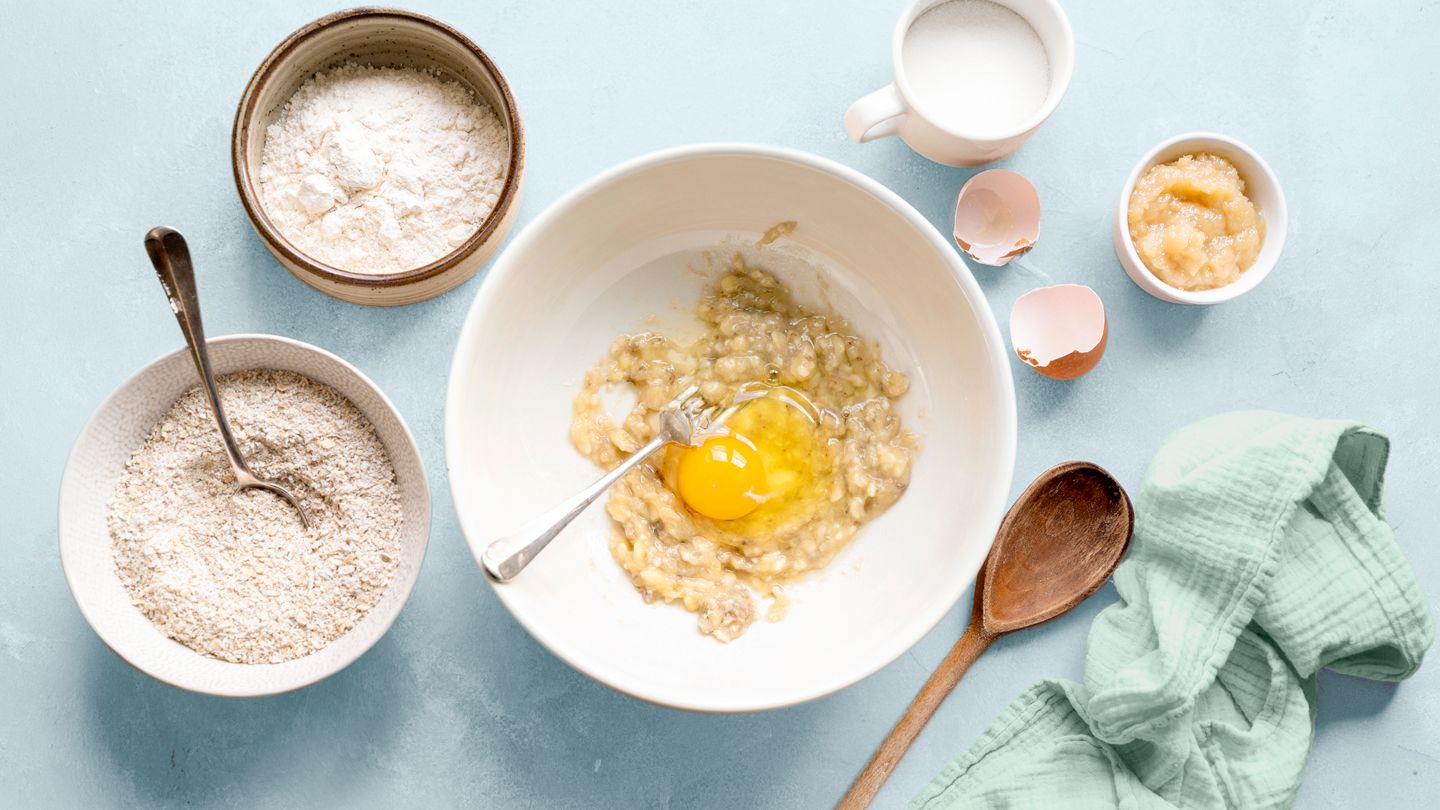
3. Experiment With Sugar Substitutes
“Unlike substitutions of applesauce, bananas, or honey, [some] artificial sweeteners (excluding sorbitol and maltitol) don’t add any sugar or carbohydrates to baked goods,” says Poulson.
With that said, there are drawbacks to using artificial sweeteners. They may change the taste of your treats slightly, and baked goods may not brown as much because they lack the sugar to caramelize. For that reason, Jill Weisenberger, RDN, CDCES, a nutritionist and author based in Virginia, recommends combining sugar with a sugar alternative. Instead of using a full cup of sugar, try half a cup of sugar and half a cup of a sugar alternative. Or use a third of a cup of sugar and two-thirds of a cup of the sugar alternative.
Keep in mind that some sugar alternatives may cause gastrointestinal upset if eaten in large quantities. “You still want to watch portion sizes when consuming baked goods made with them,” says Poulson.
Read the full article here