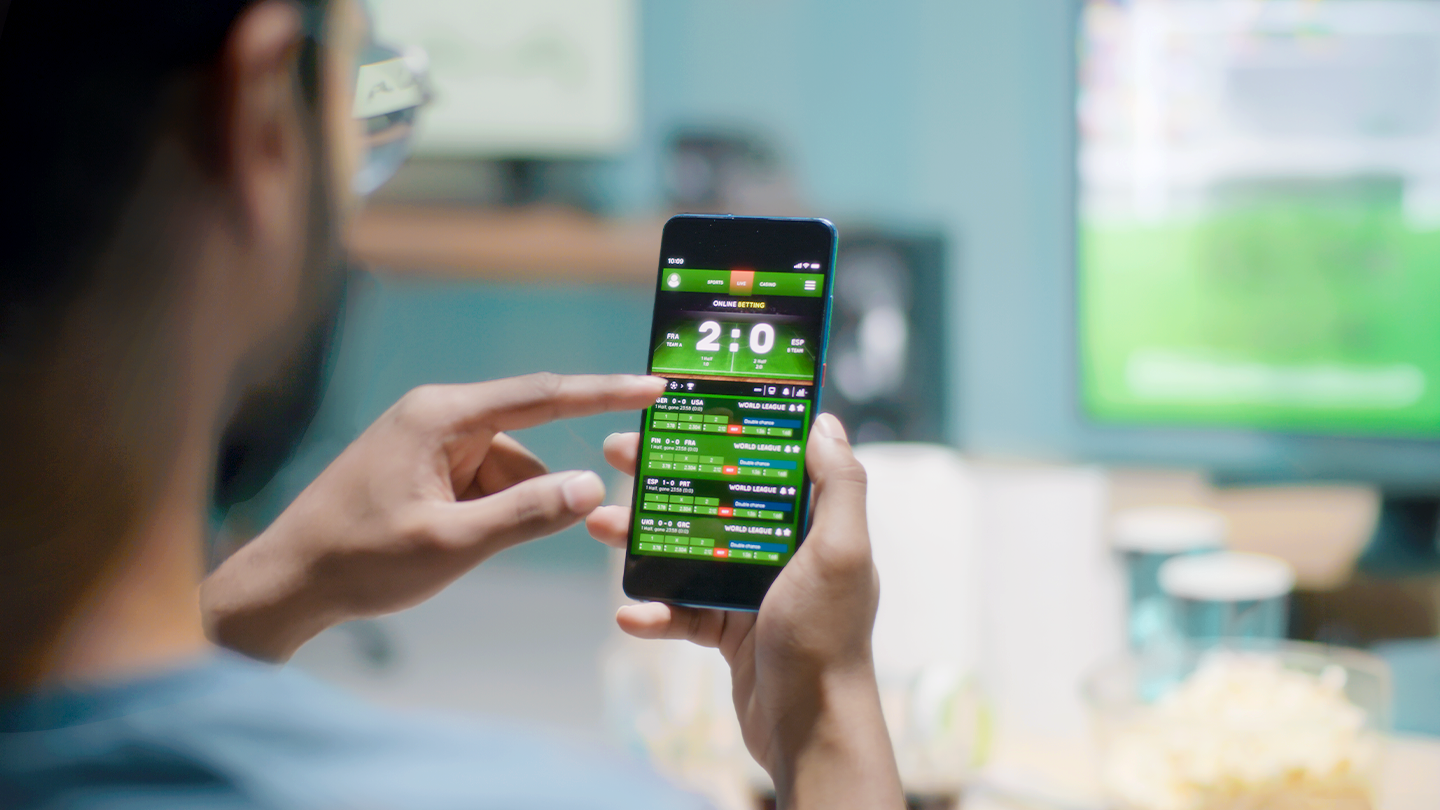
Gambling online can be much easier than going to a physical casino. “It does kind of limit the barriers to gambling because it’s so easy to be on your phone,” says Mark Meiselbach, PhD, an assistant professor in the department of Health Policy and Management at Johns Hopkins Bloomberg School of Public Health in Baltimore and an author of the JAMA Health Forum paper.
Some people with a gambling disorder struggle with a psychological phenomenon called the “near-miss effect,” where a person loses a bet but believes they were close to winning.
People who engage in online sports betting may keep placing bets after a substantial financial loss due to the near-miss effect, Polley says. “When they don’t end up getting the payout and winning, there’s this drive within their brain to keep going, even though it’s not logical,” she explains.
This can be catastrophic when you’re gambling at an online casino that never closes and bombards you with notifications.
Constant notifications from sports betting apps can make it difficult to stop engaging, as can social media. If you share a post about a win on Instagram, for example, and your post gets a lot of likes and reposts, that can trigger another dopamine hit — on top of the one you just got from the actual payout, Polley explains. That can motivate you to place another bet.
“Engagement in social media increases risk of addiction to gambling, and those two play off each other and reinforce each other,” she says.
One international study found that people who use social media more often also tend to gamble online more frequently. The researchers also noted that people with problematic gambling behaviors tended to exhibit problematic social media use. As the severity of one issue increased, the severity of the other did, too. In part, this may be because problematic social media use can lead to mental health conditions, such as depression and anxiety, which also increase the risk of gambling problems.
Read the full article here