It’s never pleasant to visualize worst-case scenarios, but doing that can help you understand how you would manage an emergency in an unfamiliar location, particularly internationally, says Anna Nowak-Wegrzyn, MD, PhD, director of the division of pediatric allergy and immunology at Hassenfeld Children‘s Hospital at NYU Langone in New York City.
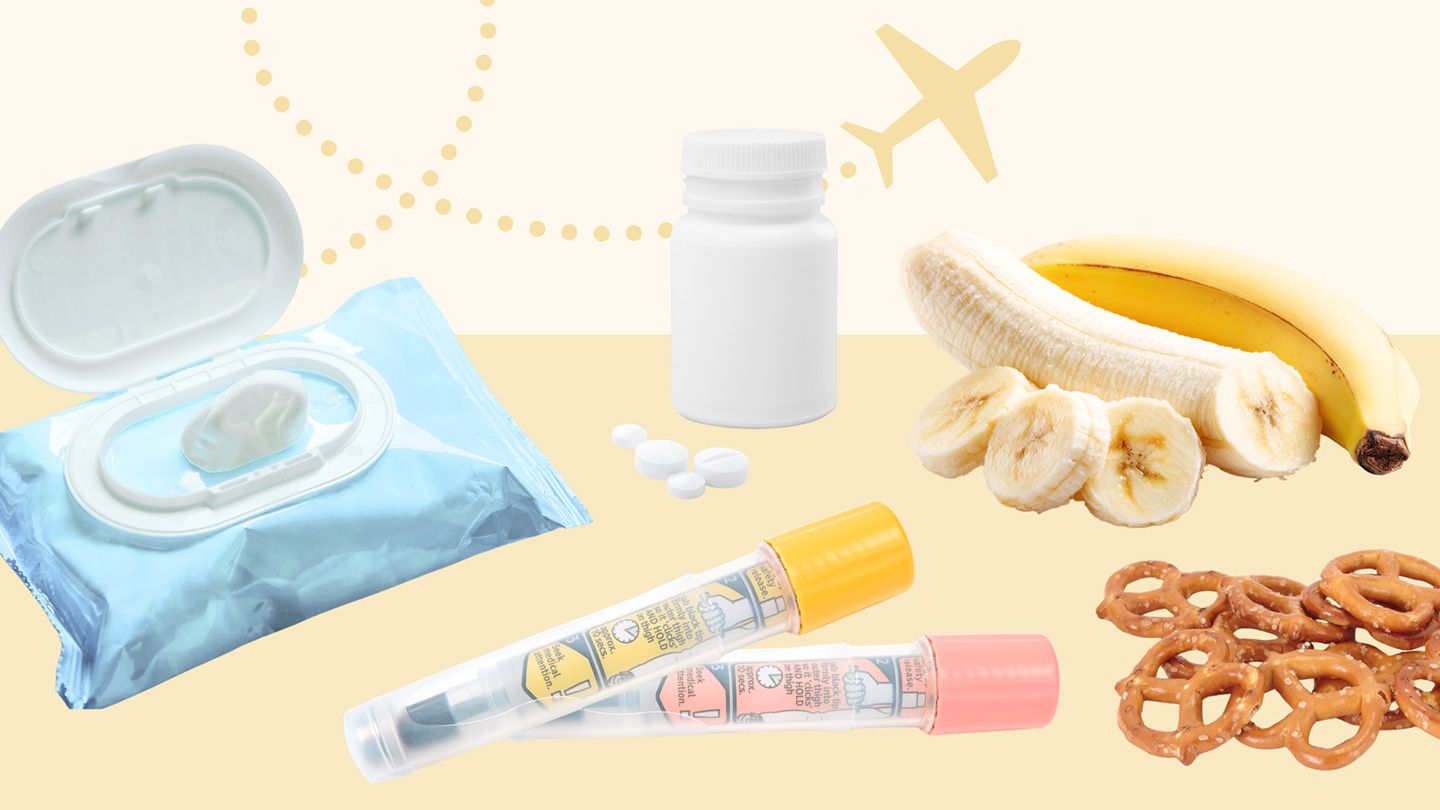
In addition to packing emergency medications like epinephrine and oral antihistamines, a bronchodilator medication, like those used as asthma inhalers, may be helpful if your child has breathing issues with peanut exposure, says Dr. Nowak-Wegrzyn.
Research in advance where emergency services are located close to where you’re staying, and what the options are for driving or calling an ambulance if needed. Have your home health team’s contact info handy, as well as any necessary medical paperwork, says Nowak-Wegrzyn. Travel insurance can be useful as well, especially because it can cover emergency transport back home (or to equivalent local facilities) when you’re abroad.
”Also, if your child has a common comorbidity like asthma, allergic rhinitis, or eczema, make sure to take medications for these conditions, because traveling increases the likelihood of these conditions worsening, due to changes in humidity, different climates, and other factors,” she says. Whether your child has a co-occurring condition or not, having a discussion with their doctor about best traveling strategies can help you plan more thoroughly.
”People with food allergies can safely travel and enjoy exploring new destinations,” says Nowak-Wegrzyn. ”It just takes preparation and being aware of the potential risks.”
Read the full article here