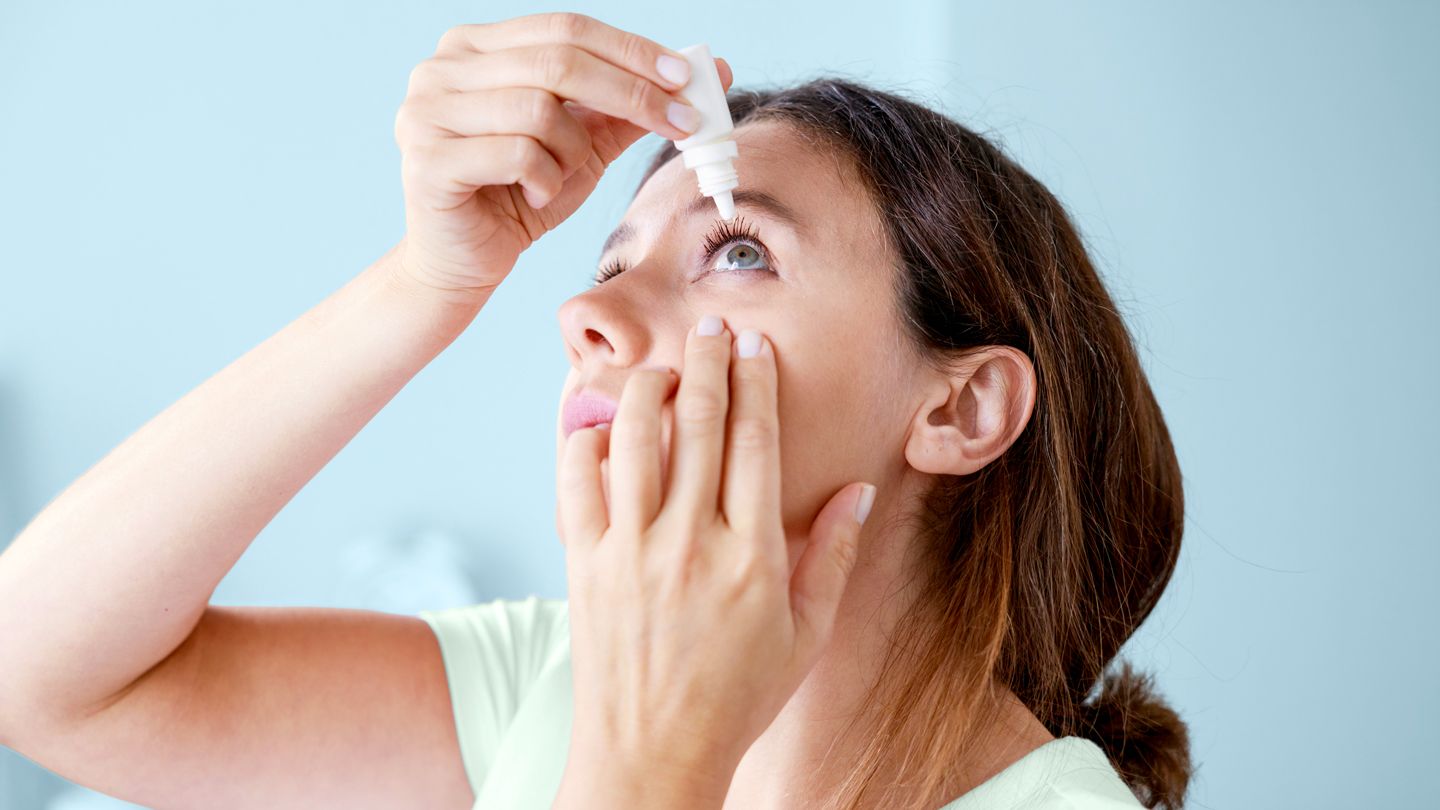
1. Frequent Use of Eye Drops
Artificial tears are the mainstay therapy for dry eye, but using them constantly may signal that your symptoms are no longer adequately controlled and it’s time to find the underlying condition and escalate treatment.
“If you feel the need to use OTC lubricating eye drops more than occasionally, it’s very much worth your time to get a comprehensive eye examination and mention the fact to your optometrist,” says Viola Kanevsky, an optometrist based in New York City and a subject matter expert for the American Optometric Association. “Having to use them several times a day every day indicates there is a deeper issue that needs to be addressed.”
Not all OTC eye drops are created equal either. Some options, especially ones designed to relieve red eyes, may be exacerbating your condition, according to Nicole Bajic, MD, an ophthalmologist at the Cole Eye Institute at Cleveland Clinic in Ohio.
“All too often I will hear from a patient that they’re using OTC drops that help for a little bit only to find out they’re using red-eye relief drops. These are vasoconstrictors,” Dr. Bajic says. These drops temporarily shrink blood vessels in the eye, reducing redness but potentially worsening dryness over time.
“Right after the drops, the eye looks whiter. But when they wear off, the redness comes back with a vengeance because it’s really dry. It’s this vicious cycle that perpetuates,” she says.
Preservatives designed to keep bacteria from growing inside the bottle can also become problematic with frequent use. Some people encounter eye irritation, more dryness, or even inflammation on the surface of the eye. If you’re using OTC eye drops with preservatives, you should limit yourself to four applications per day.
Preservative-free drops can be used as often as needed, but if they aren’t resolving your symptoms, speak to your doctor, Bajic says.
Read the full article here