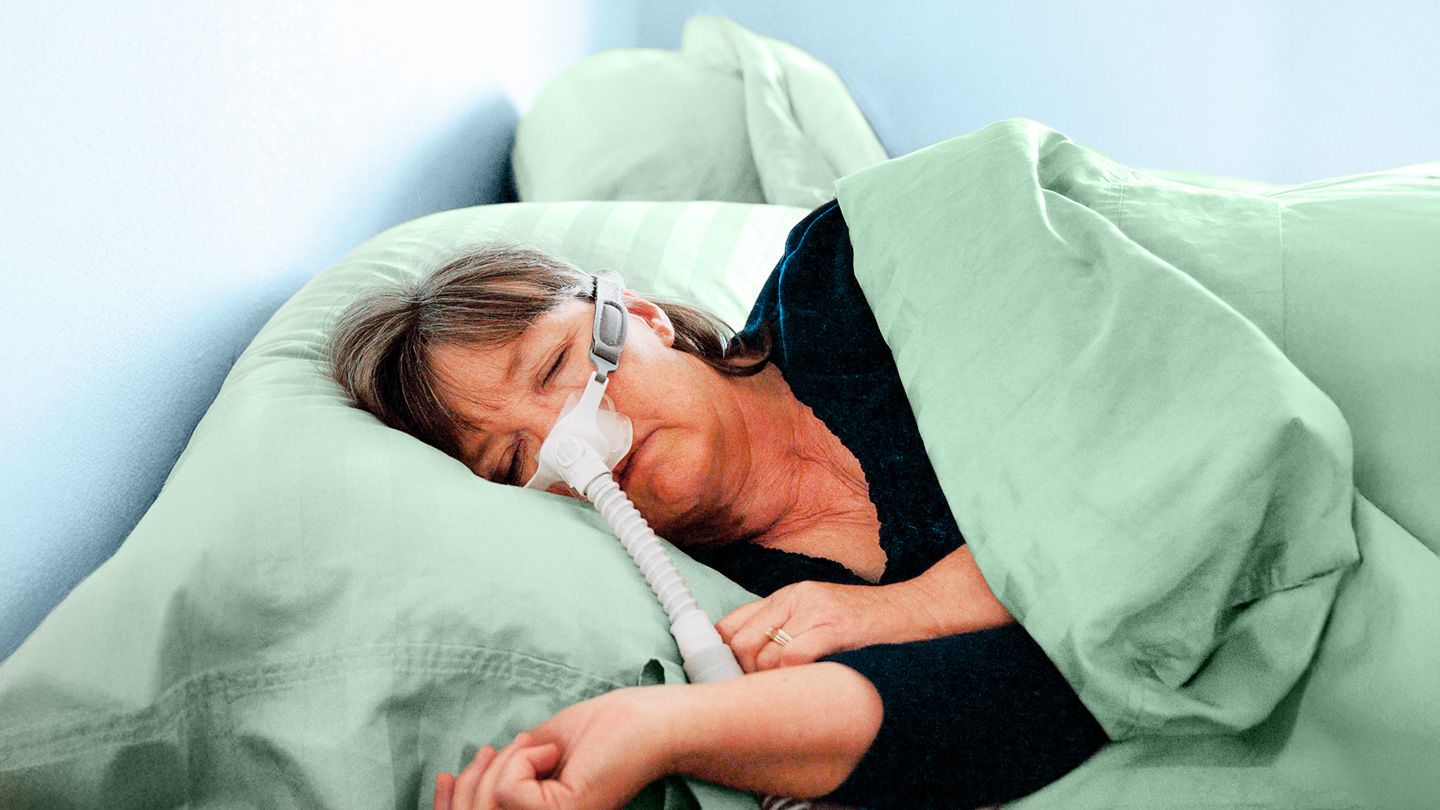
Getting used to CPAP takes time. The device has many components — mask, tubing, and machine — and you may go through some trial and error before you find the right fit and pressure settings.
“There’s no two ways about it: CPAP is strange and cumbersome, and it takes some getting used to,” Dr. Dalal says. In fact, research has found that high numbers of people who start CPAP therapy quit within a year.
Understanding the most common hurdles — and how to address them — can make the difference between giving up and getting the sleep you need.
Mask Discomfort
One size or style does not fit all when it comes to CPAP masks. You may need to experiment with a few options before you find one that feels good to you.
“For patients who are struggling with discomfort when wearing a mask, a mask-fitting session is very helpful to get the patient the mask of choice,” Arnouk says.
Feelings of Claustrophobia
The sensation of wearing a mask over your nose or both your nose and mouth can be disorienting at first. “The first few nights of using CPAP can be a struggle for some patients,” Arnouk says. He suggests wearing the mask while you’re awake — without connecting it to the machine — before you try to sleep in it. “Many patients find this technique very helpful, and usually after a few nights, patients have no trouble tolerating the mask,” Arnouk says.
If that doesn’t work, Maha Alattar, MD, a neurologist with VCU Medical Center and the chief of the sleep medicine division at Virginia Commonwealth University Medical School in Richmond, says that your doctor may recommend a smaller mask that fits under your nose, lowering the pressure, or switching from CPAP to BiPAP.
Dry Mouth, Sore Throat, or Skin Irritation
Dry mouth and throat are common complaints with CPAP therapy. To combat dryness, CPAP machines have a built-in humidifier that can be adjusted to your comfort level. “It is very important to use distilled water for the humidifier to prolong the life of the CPAP machine,” Arnouk says.
Using a room humidifier while you sleep can also help, Dr. Alattar says.
If you’re still waking up with a dry mouth or sore throat, check that your mask isn’t leaking air. If it is, you’re likely leaking water and humidity, too, Alattar says.
Irritation of the skin that touches the mask is less common but still possible. To prevent or resolve skin irritation, Arnouk recommends these practices:
- Choosing a mask made from hypoallergenic materials or with a gel cushion
- Finding a mask type that fits your facial structure
- Ensuring that the mask fits well but not too tightly
- Cleaning the mask daily with soap and water
“Over-the-counter hydrocortisone cream can help reduce inflammation and soothe the affected area,” he says. “Aloe vera or barrier creams containing ingredients like zinc oxide can also help calm the skin and create a protective layer.”
Read the full article here