1. Bring Backups for All Your Diabetes Supplies
“Bring both long- and short-acting insulin, syringes or pen needles, and a backup glucagon kit,” says Rekha Kumar, MD, an endocrinologist at NewYork-Presbyterian and Weill Cornell Medicine. She also notes that people who use an insulin pump should bring backup insulin in case of pump malfunctions.
“Some of the things that I see most commonly when hiking with people with diabetes are [CGM or pump] sites that get ripped out when backpacks are taken off or put on, [and] a lot of sweat that can lead to sites falling off,” Hanson says.
2. Bring More Sugar Than You Think You’ll Need
“It’s probably a good idea to pack more [sugar] than you’re going to need,” says Hanson, explaining that hikes can take longer than you expect. She encourages people to think about “the maximum duration of time that you might possibly be out there and pack accordingly.”
Dr. Kumar adds that it can be a good idea to pack multiple forms of sugar, and you should also consider the environment where you’re hiking. Fruit gummies can freeze in cold weather, and glucose tablets can degrade or clump because of sweat and heat. “Bring gel packets because they’re more reliable in outdoor temperatures,” she says.
3. Inform Friends About Your Condition
Hiking partners play an important role in recognizing and responding to low blood sugar. “The companions that somebody is hiking or camping with should know what low blood sugar or hypoglycemia looks like,” says Kumar.
Visible symptoms of hypoglycemia include:
- Shakiness
- Sweating
- Confusion
- Weakness
- Vision changes
- Slurred speech
Kumar says very low blood sugar may look like intoxication or altitude sickness, and just knowing there’s a range of symptoms can be crucial in remote settings where quick recognition matters.
It’s equally important your camping and hiking partners know how to respond during a low-blood-sugar event. Hanson says friends should understand in advance how you want them to help, including where your low blood sugar supplies are stored. Your friends should be prepared to find your sugar source and help you eat or drink it.
4. Pack Glucagon
Glucagon is a medication used to treat low blood sugar levels so severe that you can no longer treat them yourself by simply eating or drinking something sugary. It works by signaling the liver to release stored glucose into the bloodstream.
There are different forms of glucagon available, including a nasal spray or a pen that’s similar to an EpiPen, which Kumar says are preferable in outdoor settings, because they’re faster and easier to administer.
Ideally, you’d have someone on your trip that knows how to properly administer glucagon. “If the person is unable to swallow or loses consciousness, administering glucagon and contacting emergency services can be lifesaving. Clear, simple instructions shared in advance can support a quick and effective response,” says Barbara Eichorst, RD, CDCES, the vice president of healthcare programs at the American Diabetes Association.
5. Wear a Medical ID Bracelet
Medical ID bracelets or necklaces alert emergency personnel to conditions such as type 1 diabetes. An ID bracelet could help in a situation where you become unresponsive, such as with extremely low blood sugar.
“Wearing a medical identification bracelet or necklace that indicates type 1 diabetes and insulin use is strongly recommended,” says Eichorst. “In the event of an emergency, this can help others, including first responders, quickly understand the situation and provide appropriate care.”
6. Adjust Insulin for Activity
If you’re going to be walking, hiking, kayaking, or skiing for most of the day, you might need to dial down the amount of insulin you’re using, both before and after your workout.
“Aerobic exercise like hiking lowers blood sugar, and that can persist for 12 to 24 hours post exercise. Even the night after you hike, you’re at risk of low blood sugar,” says Kumar. For people using insulin pumps, this may involve temporarily reducing basal insulin delivery, while those on injections may need to adjust both long-acting and mealtime doses, she says.
Hanson says it may be helpful to “think about putting your basal rates back to normal about 30 minutes before you’re about to end your hike to avoid a really big blood sugar spike at the end of the day.”
If you’re not familiar with making such adjustments on your own, it’s a good idea to discuss your plans with your doctor.
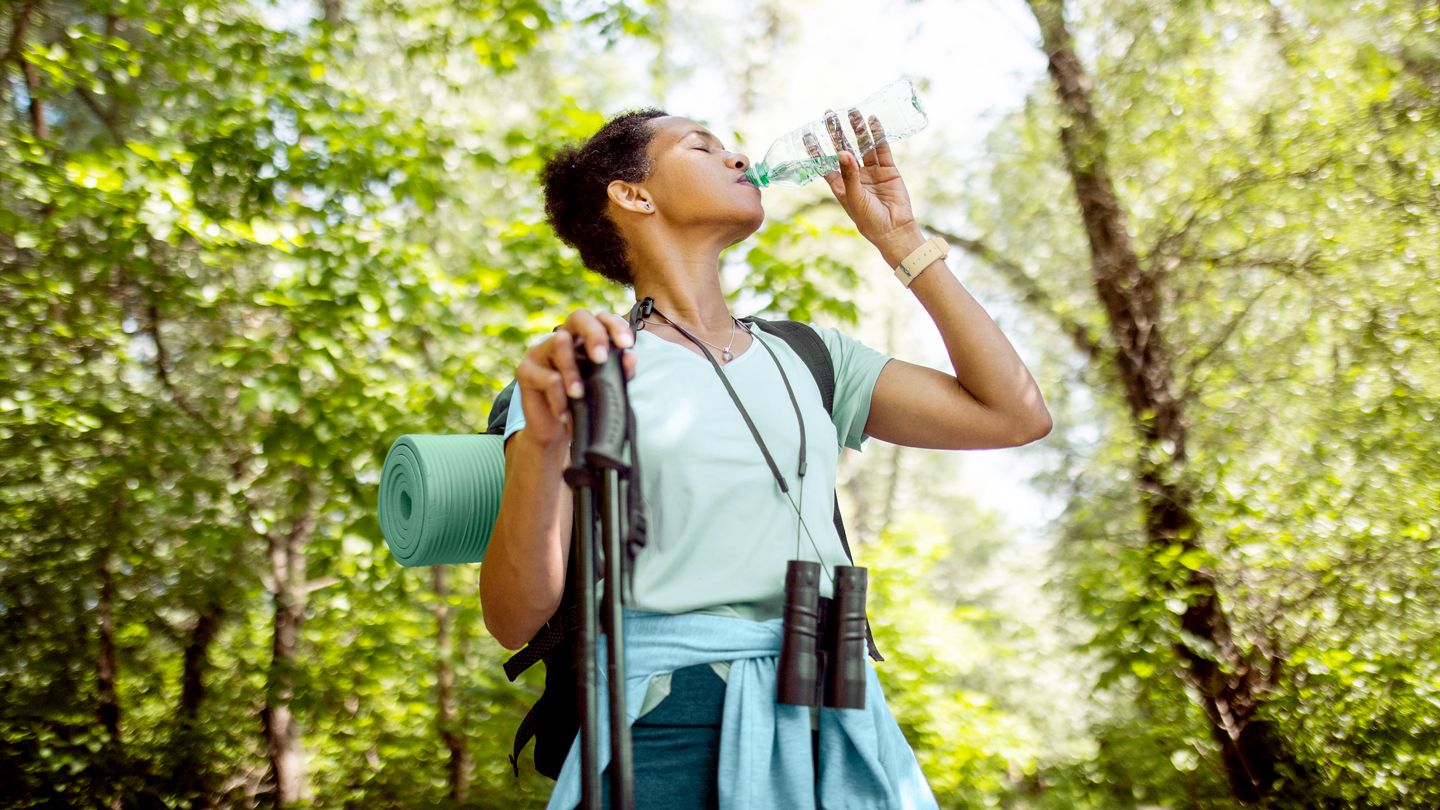
7. Stay Hydrated and Fueled
Don’t neglect proper nutrition either. “During the day, your body is using all the food you’re eating for energy, but it’s also breaking down energy that’s been stored in your muscles for emergencies or just for long days like this,” says Hanson. “And those stores need to be replenished.”
It can be tricky to decide what to eat during a long day of exercise, because you have to contend with more blood sugar variables than normal. “Combining fast-acting carbohydrates for immediate needs with more sustained sources of energy, such as snacks that include carbohydrates and protein, can support stability,” says Eichorst, noting that “eating small amounts at regular intervals during longer hikes can also help maintain more consistent glucose levels.”
8. Take Care of Your Feet
You can prevent blisters by choosing the right shoes and aggressively treating your feet as soon as you feel irritation. “If you’re planning on buying a new pair of hiking boots, make sure you give yourself a lot of time to work them in, because a new boot on a long trail on a hot day is a recipe for blisters,” says Hanson. “Stop as soon as you feel rubbing or something feeling off, because fixing it immediately is a great way to stop blisters from happening.”
When blisters do happen, prompt treatment is critical. “If a blister develops, keeping it clean and covered and monitoring for signs of infection can help support healing,” says Eichorst.
9. Know When to Call It Quits
In some circumstances, it might be safest to cut a camping or hiking trip short. Kumar says the following scenarios may warrant ending a trip early.
It may also be important to consider your supplies. With repeated episodes of low blood sugar, “you may have consumed all or most of the treatments that you’ve brought along with you,” says Hanson. “And you still need emergency treatment for the way out.”
With higher blood sugars, she says it’s possible to “get to a point where you might have used all of your pump sites, or your insulin has gone bad,” in which case ending a trip is the wisest choice.
The Takeaway
- Hiking and camping with type 1 diabetes requires extra preparation: packing backup insulin, glucose sources, and diabetes supplies in case of emergencies or equipment failure.
- Physical activity, heat, altitude, and changing meal schedules can all affect blood sugar levels, making it important to monitor glucose closely and adjust insulin, hydration, and nutrition as needed.
- Let hiking companions know how to recognize and respond to low blood sugar, and don’t hesitate to end a trip early if blood sugar becomes unsafe or supplies run low.
Read the full article here