


What if I Already Used Tanning Beds? Past Use Experts say that even if you were a frequent indoor tanner in the past, it’s never too late to stop. Changing your behavior can prevent additional damage and give your skin a chance to recover. For example, Chon has had patients with severe sun damage whose skin improved once they stayed out of the sun and tanning beds. Over half of Gen Zers in the AAD survey were unaware of the risks associated with sunburns, and 11 percent reported a sunburn in 2025 that caused blisters. But preventing sunburns is extremely important for reducing skin damage and cancer risk.e60dc2a1-f33c-4a05-9b50-8e3e8e59762967d27f2c-e33c-4d23-a264-5b20cf6139f2 Getting regular skin checks at the dermatologist is important, too, for catching cancer early. If you’ve been thinking about trying indoor tanning, don’t start. Encourage your children to avoid this practice, too. Most states have already banned or regulated indoor tanning for children younger than 18.e60dc2a1-f33c-4a05-9b50-8e3e8e597629cc523afb-f45a-40ca-9227-5fade6cf8854 Evidence suggests that preventing indoor tanning among young people could save lives. A study published in 2020 estimated that banning tanning beds for people ages 12 to 35 in the United States and Europe would prevent 448,000 new melanoma diagnoses.e60dc2a1-f33c-4a05-9b50-8e3e8e597629de444e24-c7f0-4c6c-8e9b-5fde314e8656
Are Tanning Beds Safer Than the Sun? Tanning Beds vs. the Sun According to the 2026 AAD survey, 13 percent of Gen Z believes that tanning beds are safer than tanning in the sun. Indoor tanning proponents also claim it’s safer because tanning beds only release UVA energy, while the sun emits both UVA and UVB light.e60dc2a1-f33c-4a05-9b50-8e3e8e5976297ecf5374-bdc1-48e6-9c14-1aa3c153e810 But the UVA intensity in a tanning bed is 12 times higher than that of the sun. “It’s more harmful to the skin because UVA penetrates more deeply than UVB, and indoor tanning has a strong connection to melanoma,” says Dr. Chien.e60dc2a1-f33c-4a05-9b50-8e3e8e597629bb88163c-43c3-4198-8af5-50643085809e
Resources We Trust Mayo Clinic: Melanoma Pictures to Help Identify Skin CancerCleveland Clinic: Are Tanning Beds Safe?Skin Cancer Foundation: Tanning and Your SkinU.S. Food and Drug Administration: The Risks of TanningCenters for Disease Control and Prevention: Reducing Risk for Skin Cancer
Are Tanning Beds Safe in Moderation? Is Moderate Use Safe? Contrary to social media trends, no amount of tanning bed use is safe. Yet about 29 percent of Gen Zers from the AAD survey thought it was safe as long as they didn’t burn.e60dc2a1-f33c-4a05-9b50-8e3e8e597629e067eba9-bd69-4d30-b1db-bfd46f06e48f The reality is, just one visit to the tanning salon can do serious damage to your skin. A single tanning bed session before age 35 can increase your risk of melanoma, and significantly increase your risk with each tan thereafter.e60dc2a1-f33c-4a05-9b50-8e3e8e597629f9d57736-c3ec-4a35-b983-328fceec83e2 Research also shows a strong association between indoor tanning and increased early-onset skin cancer diagnoses before the age of 50.e60dc2a1-f33c-4a05-9b50-8e3e8e59762932307065-402d-45f1-b732-6d65002a3ba6 “Our position as dermatologists is just to avoid indoor tanning altogether,” says Chien.
Is There a Safe Way to Tan? Safe Ways to Tan The AAD’s survey found that 20 percent of Gen Z says getting a tan is more important to them than preventing skin cancer. But there are several other ways to get glowing skin without assuming the risk.e60dc2a1-f33c-4a05-9b50-8e3e8e597629dc3171c3-a422-4312-bc92-959cdfe4867b The first option our experts suggest is using a sunless tanner. These products, which you can apply yourself or have applied at a spray tanning salon, use a chemical called dihydroxyacetone to darken your skin and simulate the look of a real tan.e60dc2a1-f33c-4a05-9b50-8e3e8e59762952a71a8c-5fee-4326-acb4-bbfc81ccbb97 “I have a lot of patients who use them when they want to go on a trip or have a special event,” says Chon. “They look very natural.” Just remember that a sunless tanner doesn’t offer any protection against the sun. You’ll still need to wear sunscreen and protective clothing when you’re outdoors, and seek shade when possible. When using sunscreen, aim for a product with SPF 30 or higher, and apply 1 ounce (enough to fill a shot glass) to your entire body for every two hours you’re in the sun.e60dc2a1-f33c-4a05-9b50-8e3e8e597629918c8c8b-20b2-483e-8c22-af5689b6bfb7
The Takeaway Social media hype has led to a resurgence in the popularity of tanning beds, but indoor tanning isn’t safe in any amount. Even a single session in a tanning bed can increase your risk of melanoma, the deadliest kind of skin cancer. Tanning beds can emit 12 times more UVA rays than the sun, which can contribute to harmful sunburns and skin damage. If you want that bronzed look, a self-tanner or bronzing makeup is a much safer way to get it. To protect your skin while outdoors, wear sunscreen and protective clothing, and seek shade.
Why Are Tanning Beds Bad for You? Tanning Bed Risks Tanning beds are harmful because they expose your skin to high-intensity ultraviolet (UV) radiation. UV radiation damages the DNA in your skin — this is what a tan actually is — which could lead to skin cancer.e60dc2a1-f33c-4a05-9b50-8e3e8e597629a61a62b5-734b-4e3b-8798-16df563f2d9a The biggest risk from indoor tanning is melanoma, a type of skin cancer that starts in skin pigment cells called melanocytes.e60dc2a1-f33c-4a05-9b50-8e3e8e5976292a5837dc-f571-430a-afa0-aebeddbc2cda Melanoma is more likely to spread than other skin cancers, which makes it so deadly. Among people diagnosed with melanoma between 2015 and 2021, the five-year survival rate was 99 percent when caught early. However, when this cancer does spread to distant parts of the body (for example the lungs, liver, or lymph nodes), the five-year survival rate is just 35 percent. This is why catching it early is so important.e60dc2a1-f33c-4a05-9b50-8e3e8e5976299a76ba61-5c9b-4b46-9f9e-a58ea990ee7f Tanning bed use increases your risk of melanoma by 47 percent, per the AAD. It also increases your risk for other skin cancers, including squamous cell carcinoma and basal cell carcinoma.e60dc2a1-f33c-4a05-9b50-8e3e8e5976291c124cf1-9801-4246-b53c-b3b5c118124c And while tanning might give you a healthy-looking glow in the short term, it accelerates the skin aging process. In fact, 19 percent of the Gen Z cohort believes getting a “base tan” will prevent detrimental sunburns — but this is simply not true.e60dc2a1-f33c-4a05-9b50-8e3e8e5976290089fd73-07ca-49d7-bd2c-67c843373efa “You get a lot of sun damage in a much quicker way because of the intensity of the UV exposure. So the wrinkles, the saggy skin, the discoloration, the broken blood vessels — all of that is part of the sun damage that occurs,” says Susan Y. Chon, MD , a professor and the chair ad interim of the department of dermatology at the University of Texas MD Anderson Cancer Center in Houston. You also put your eyes at risk every time you tan. UV light can damage both your eyelids and eye, increasing your likelihood of cancer of the eyelid and uvea (middle layer of the eye), photokeratitis (sunburned eye), and cataracts .e60dc2a1-f33c-4a05-9b50-8e3e8e597629d34eadc6-d3fc-4d94-8a9c-8b3b2954c5df Despite its many dangers, tanning can be addictive, like alcohol or drugs, causing similar withdrawal symptoms when you try to stop.e60dc2a1-f33c-4a05-9b50-8e3e8e597629520d9bf0-d729-400d-80b6-55e5a548b9f4 “I had a patient tell me, ‘I just feel like I have to have it.’ They are almost in an addictive cycle,” says Dr. Chon. “It’s something that has minimal benefits as far as appearance, but it does so much damage and puts you at so much risk.”
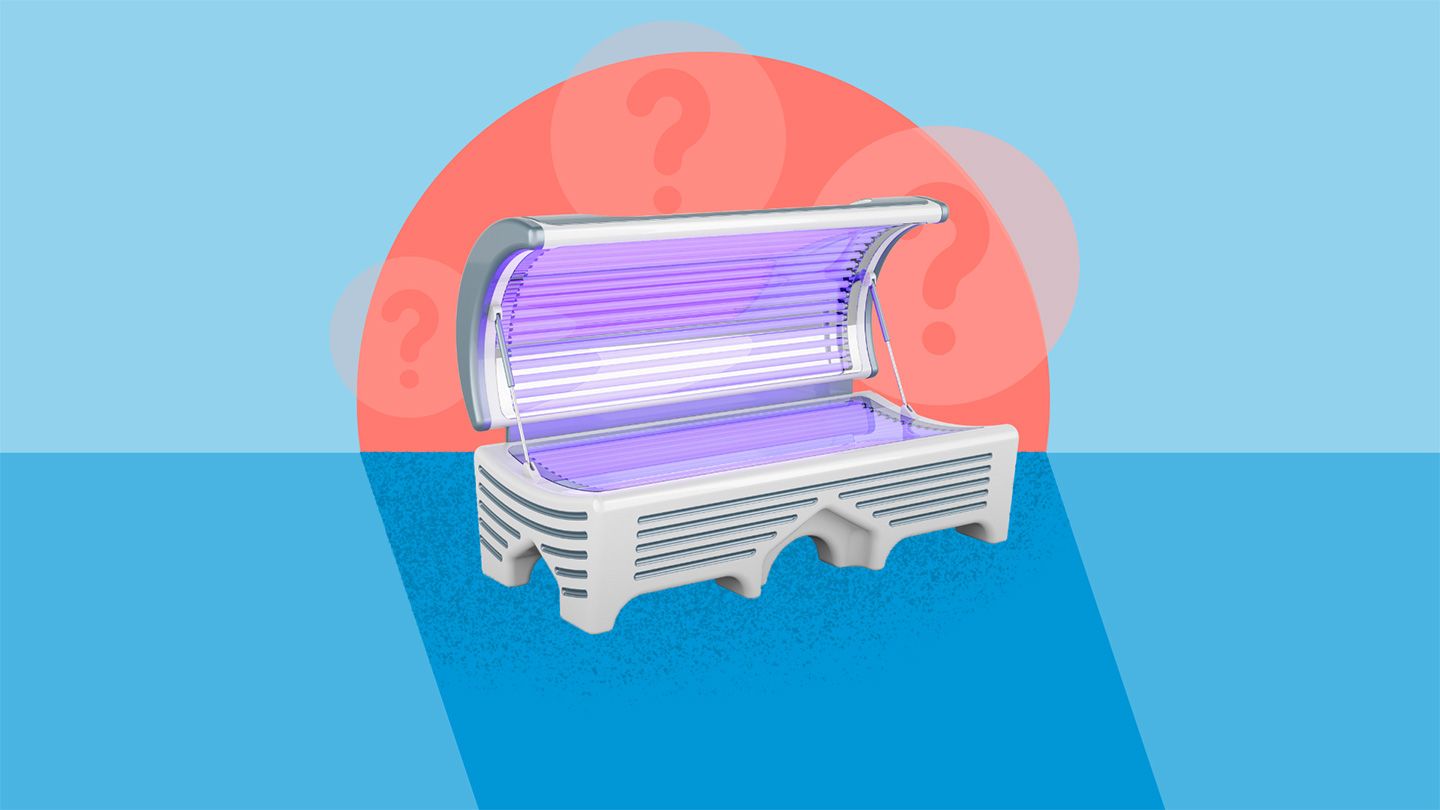
Tanning was a booming industry in the 1980s, but recently, it’s made a comeback thanks to TikTok. Despite warnings from dermatologists and health experts about the dangers of tanning beds, Gen Z is following in the footsteps of influencers who tan — and spread false information about its benefits. A May 2026 survey by the American Academy of Dermatology (AAD) found that half of Gen Z young adults rely on Instagram and TikTok for skin-care information, and about 52 percent believe one or more myths about the benefits of tanning.e60dc2a1-f33c-4a05-9b50-8e3e8e59762978d129ad-62d4-4e2d-aa7b-52542fb0262f For example, 13 percent believe tanning beds are safer than the sun. But “there’s now ample literature to show that indoor tanning really is not safe. It’s directly linked to melanoma ,” says Anna Lien-Lun Chien, MD , an associate professor of dermatology at Johns Hopkins School of Medicine in Baltimore. Read on to learn why tanning beds are so risky, plus safer ways to get sun.
Read the full article here

Leave a comment
