“Using a CPAP while traveling can be difficult,” says Chafen Hart, MD, a sleep medicine specialist at National Jewish Health in Denver. “You need a voltage converter for foreign travel, and the machine itself can be bulky. Also, while it counts as medical equipment, which allows you to bring it as a carry-on, lugging the machine around can be problematic.”
Other factors — jet lag in particular — can disrupt your sleep schedule, she says, and eating heavy meals and drinking alcohol on vacation may worsen sleep apnea symptoms. But certain strategies can ease common travel issues so you can enjoy your trip without losing sleep in the process.
1. Consider a Travel CPAP
If you’re taking a road trip, bringing your regular CPAP machine is easy, but for other types of travel, it may be worth investing in a model that’s designed specifically for travel, says Sarathi Bhattacharyya, MD, a pulmonologist, a sleep medicine specialist, and the medical director of the MemorialCare sleep disorders center at Long Beach Medical Center in California.
“These machines are smaller and more easily transported,” he says. “They typically don’t use distilled water for humidification, so that’s one less thing to think about when you get to your destination.”
Because some models are ultralightweight and compact, and can use battery power instead of being plugged in, a travel CPAP can often be used during a flight, which is useful if you’re trying to sleep on a plane, says Dr. Bhattacharyya.
One sticking point is that these machines are not usually covered by insurance, so they might be a pricey investment, Dr. Hart says. However, because they’re medical devices, it’s possible to use your flexible spending account or health savings account funds to purchase one.
“Other treatment options are mandibular advancement devices and hypoglossal nerve stimulators,” says Madeleine Basist, MD, a pulmonologist at Northwell Health’s Lenox Hill Hospital in New York City. “These may be easier to travel with, since they are more compact and require less equipment.”
2. Pack a Sleep Apnea Travel Kit
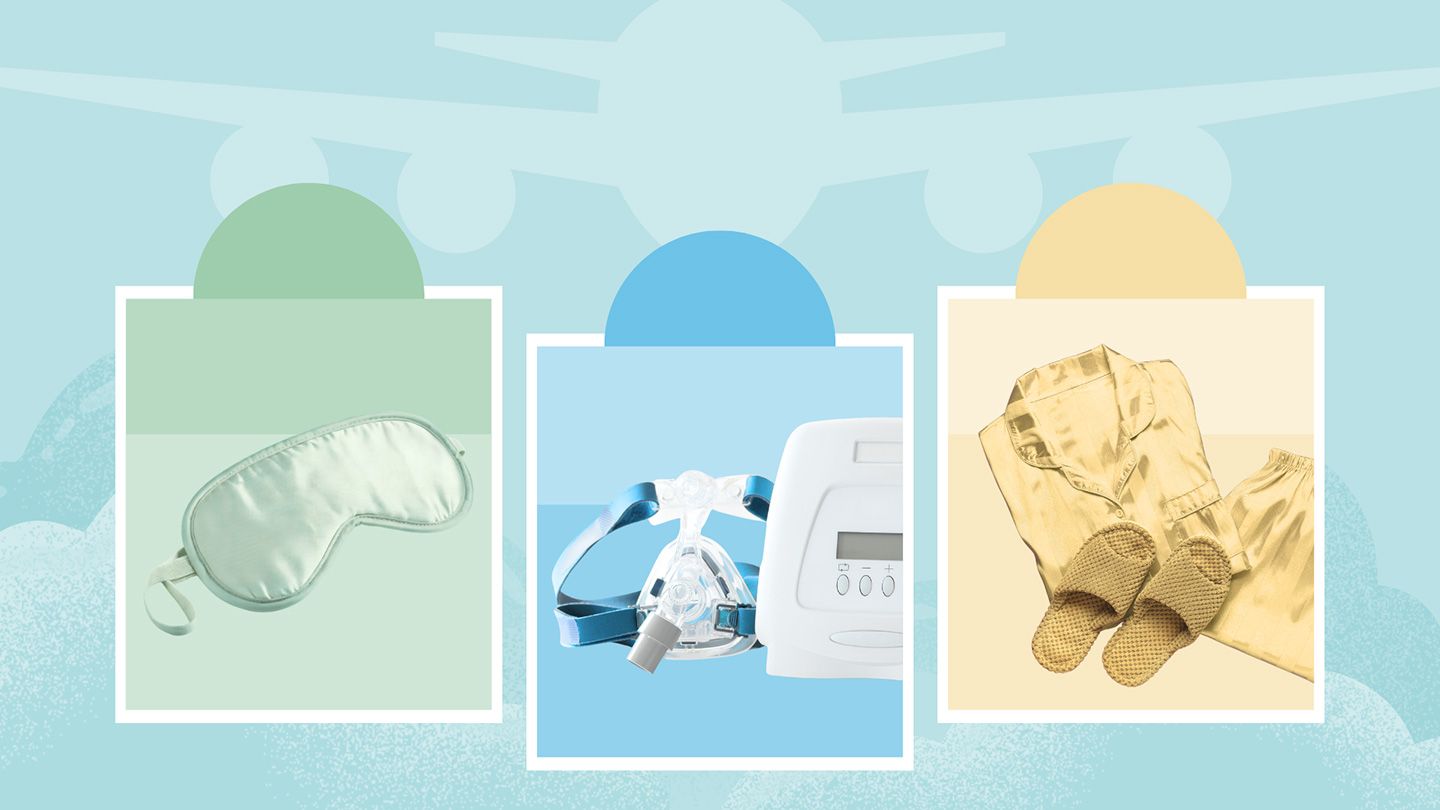
It’s helpful to bring items that you use to sleep comfortably at home, says Dr. Basist, for example, an eye mask, pillow, and white noise machine. Even packing your favorite pajamas can give you a sense of familiarity and comfort.
“Maintaining your bedtime routine and sleep habits while traveling can help with adjusting to a new sleep environment,” she says. Also bring your doctor’s contact information and a letter of medical necessity for your CPAP, which will make it easier to bring through airport security and customs.
3. Adjust to the Time Zone in Advance
“When jet lag results in insufficient sleep, it can have a rebound effect that may cause more significant sleep apnea symptoms,” says Hart. “Jet lag can also lead to eating at weird times, and drinking more caffeine or alcohol, which can affect sleep quality.”
Prepping for a different time zone in advance can be helpful because you can adjust faster to that schedule, she says. If you’re traveling east, several days before your departure date, try going to bed earlier than usual, and get exposure to morning sunlight as soon as possible when you wake up. This will help reset your body clock for a new time zone.
4. Get More Physical Activity
When you’re at your destination, avoid the urge to sleep in as a way to catch up, because this may delay how your body adjusts to a different time zone, says Bhattacharyya.
Other tips for getting better sleep: Avoid large meals, particularly in the evening, and get some light to moderate activity during the day, as that can promote sleep and help with the adjustment to a different time zone, he says.
Even a small amount of physical activity can improve sleep, and that can have a ripple effect on daytime fatigue and general well-being.
If you’re concerned about travel and how it will affect your sleep apnea treatment, talk with your healthcare provider before your trip.
Read the full article here